Last updated 2026-08-19
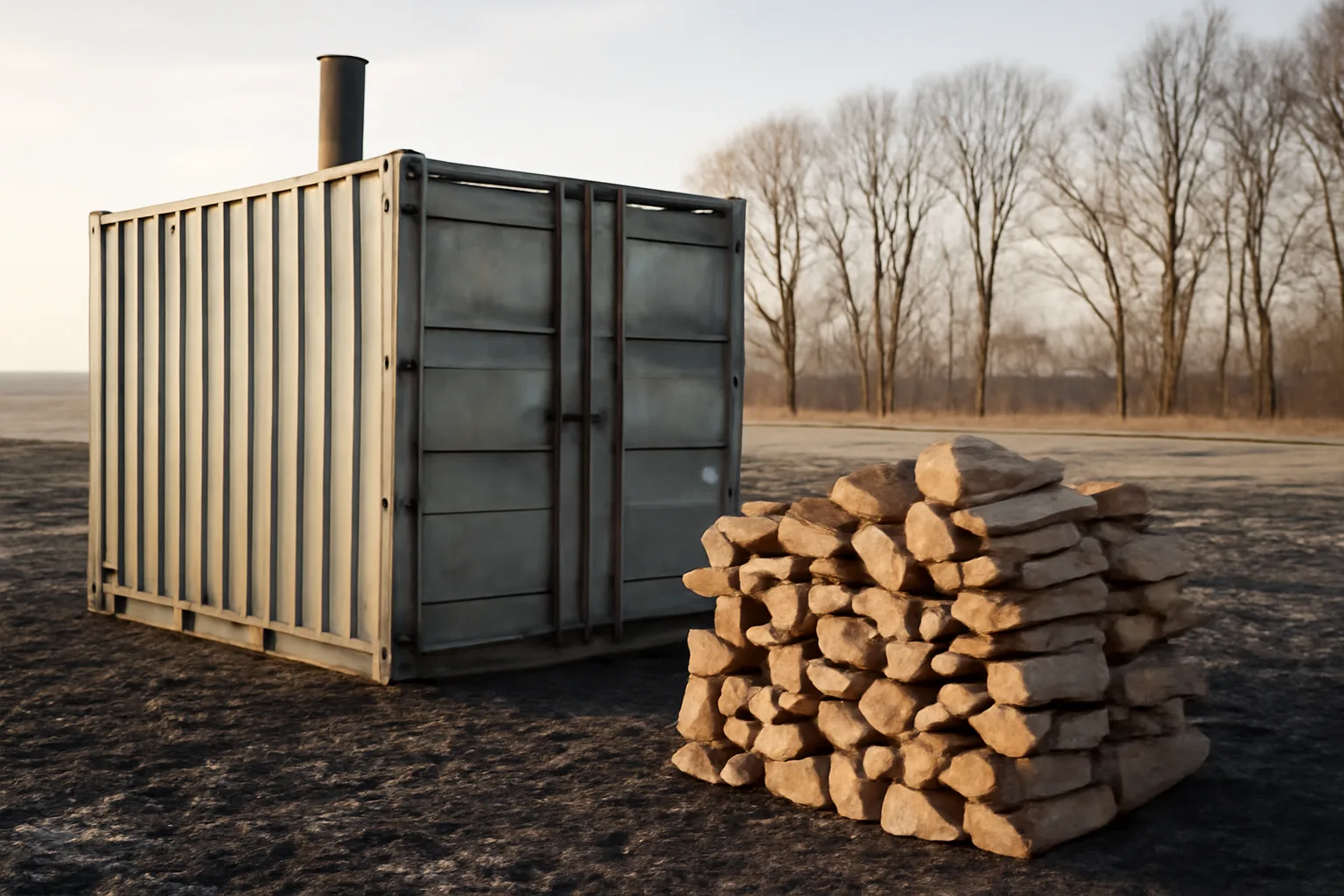
TL;DR
Iowa publishes no statewide kiln-dried firewood price. You pay for wood, kiln energy, labor, and compliance, then sell by the legal 128-cubic-foot cord. No single kiln-firewood license exists. You still need Iowa business and sales-tax paper, honest measure, and any county or USDA heat-treat paperwork that fits. Pest kill can be an hour at temperature. Getting wood dry enough to sell takes days.
How much does kiln firewood cost in Iowa?
Iowa has no official statewide price for kiln-dried firewood. What you pay, or what you can charge, is a private number that moves with species, split size, delivery miles, bags versus a stacked cord, and whether the load is actually dry. A legal Iowa cord is 128 cubic feet [1]. Confirm today's asking price with yards near you, not a national average.
I will not invent a current Iowa dollar-per-cord figure. Nobody runs a public, board-confirmable kiln-firewood price index for this state. Listings on farm boards and marketplace apps mix face cords, ricks, truckloads, and honest 128-foot cords. That mix is why two quotes that sound far apart are sometimes the same pile measured two ways.
Your cost floor is wood plus cutting and splitting plus kiln energy plus labor plus wrapping and delivery plus shrink plus tax. Soft maple and mixed hardwood are common Iowa burner wood, not walnut. If someone quotes furniture-grade walnut as stove wood, you are shopping in the wrong pile.
Retail kiln-dried wood costs more than air-dried wood because you are buying time and a heat record. In a wet fall that premium is real. In a windy March after a long seasoning year, plenty of buyers will not pay it. I'd rather lose a cheap sale than put a wet load on a truck and wait for the complaint.
Lining Iowa up against another state's street prices? Start with how that state defines a cord and whether parks demand a heat-treat stamp. The kiln firewood cost in Colorado and kiln firewood cost in Idaho pages are useful for that comparison, because those markets lean harder on certified wood than a typical Iowa county road.
What are you actually paying for in a kiln-dried Iowa cord?
You are paying for four things that show up on paper, and a fifth that lives on your utility bill.
First, the wood. Iowa timber is a private market. Sawlog stumpage gets surveyed. Firewood is usually tops, storm wood, and low-grade hardwood, so it has no tidy official series. Second, measure. Iowa law fixes the cord, not your pickup bed [1]. Third, tax. Iowa puts a six percent state sales tax on retail sales of tangible personal property, and local option tax can stack on top [2]. Fourth, the business filing if you are not selling the odd pickup load as a hobby. Iowa collects $50 when articles of incorporation are delivered for filing [3].
The fifth is energy and time inside the kiln. That number is your rate and your batch log, not a line in the Iowa Code.
| Piece | Fixed by | Confirm with |
|---|---|---|
| Wood | Private timber and salvage | Your logger and current local quotes |
| Cord size | 128 cubic feet | Iowa Code 210.26 [1] |
| State sales tax | 6 percent | Iowa Code 423.2 [2] |
| Entity filing | $50 articles | Iowa Code 490.122 [3] |
| Kiln energy | Your tariff and schedule | EIA Iowa electricity profile [4] |
A cheap kiln-dried cord is often a short cord. If the crib is 4 by 4 by 8 feet of loosely thrown pieces, you do not have 128 cubic feet of wood. You have air. I'd rather print the crib dimensions on the invoice than argue later.
Do you need a license for kiln firewood in Iowa?
No. Iowa does not issue a single statewide kiln firewood license. You still need ordinary paper if you sell to the public.
Register the business with the Iowa Secretary of State if you want an LLC or corporation. Iowa Code 423.36 says a retailer making taxable sales needs a valid permit [5]. Sell by a legal unit so you do not pick a fight with weights and measures under Iowa Code chapter 215 [6]. Ask your county zoning administrator whether a commercial kiln and a wood yard are allowed on that parcel. If you burn fuel to heat the kiln, ask Iowa DNR Air Quality whether a construction permit applies to your unit [12]. If you want a USDA heat-treatment certificate that other states or buyers will accept, that is a federal compliance agreement, not an Iowa firewood card [7][11].
None of those boards publish a guaranteed processing time I would put in writing. Confirm fees and forms on the current page, because the legislature can change a dollar amount.
Selling a few loads off your own place to neighbors is a different fact pattern than a roadside retail yard with employees and a burner. Don't copy someone else's Facebook setup and assume it is legal. I'd walk the county planning desk before I pour a kiln pad. A pad is hard to move. A conversation is cheap.
Cities can add transient merchant or peddler rules if you hawk door to door. That is local. Confirm it.
How long does kiln firewood take in Iowa?
Pest kill and drying run on different clocks. The common USDA firewood heat schedule (T314-a in the PPQ Treatment Manual) is 60 minutes once the wood hits 60 C (140 F) [7][11]. That hour does not start when you light the burner. It starts when the coldest monitored core is at temperature. Another published schedule uses a hotter set point and a longer hold. Your compliance agreement names the one that counts.
Drying to a burnable moisture content takes much longer. The U.S. EPA's Burn Wise program treats kiln drying as a matter of days, and air seasoning as many months [8]. Green oak in a stuffed chamber will not be honest firewood by supper. Anyone who tells you a two-hour cycle makes a full cord of 15 percent oak is selling you a story.
Iowa weather changes the air-dry side, not the physics inside a closed kiln. January air is dry and helps a shed. July humidity works against you if you leak wet air back onto the load. I'd still run a moisture meter on every batch and keep the printouts. A kiln stamp with no moisture number is how you get returns in February.
For planning, think in batch days, not minutes. Load, heat, hold, cool, meter, restack. Small homemade kilns can take several days per charge. Bigger commercial chambers can turn faster if the wood was already partly dry. Thickness matters. Sixteen-inch splits lose water slower than kindling. Nobody has a public Iowa-only kiln schedule I trust. The closest honest numbers are the USDA hold time and the EPA days-versus-months split [7][8].
What moisture and heat-treat numbers does Iowa care about?
Buyers mix up killed the bugs with dry enough to burn. They are not the same.
EPA Burn Wise tells people to burn dry wood and treats seasoned firewood as 20 percent moisture or less [8]. A load can hit 140 F at the core and still be too wet to sell as quality firewood if you pulled it early. Heat can sterilize wet wood. It does not finish the drying by itself.
USDA's common firewood treatment hold is a 60 C (140 F) core for 60 minutes [7]. That is the number I would put on a treatment log if I wanted a buyer or a receiving state to take me seriously. Probe placement matters. A probe in the air stream is cheating.
Iowa's legal number for the sale itself is volume, not moisture. Iowa Code 210.26 says, "A standard cord of wood shall contain one hundred twenty-eight cubic feet." [1] Moisture is a quality claim. Volume is the legal unit. Print kiln-dried on a bag and you just made a moisture claim you should be able to show.
I'd sell on three recorded facts: crib size, batch high-temp and hold, and a moisture range from a meter. Skip the adjective pile. Premium select seasoned means nothing in a dispute.
The Forest Products Laboratory Wood Handbook is the dry science behind why thin pieces and air flow beat wishful thinking [9]. Read that before you buy a used reefer box and call it a kiln.
How do you sell firewood legally by the cord in Iowa?
Sell firewood in Iowa by the cord or a stated fraction of a cord, and make the 128-cubic-foot math obvious [1]. Weights and measures authority sits with the Iowa Department of Agriculture and Land Stewardship under Iowa Code chapter 215 [6]. NIST Handbook 130 is the national method-of-sale reference most states lean on for firewood language [10].
A face cord, a rick, and a truckload are not Iowa legal cords unless they actually contain 128 cubic feet. I'd print length of pieces and the stacked dimensions on every invoice. If pieces are 16 inches, a 4 by 8 face is not a cord. It is about a third, and only if it is stacked tight.
Don't play games with thrown versus stacked. Customers photograph the pile. IDALS can too.
If you bag firewood, the bag needs a net quantity a reasonable person can check. Confirm current labeling expectations with Weights and Measures before you print thousands of sleeves. Reprinting bags is a stupid tax.
I'd keep a folding rule in the truck and measure the crib in front of the buyer on the first few sales. It feels awkward once. It prevents a winter of arguments.
For a tighter pest and air market, see kiln firewood cost in California. Iowa is looser on pests than that, and stricter than people think on the measuring stick.
What taxes and business filings hit a kiln yard in Iowa?
Sell kiln firewood retail in Iowa and you plan on Iowa sales tax, unless the Department of Revenue tells you a specific exemption fits your invoice. Iowa Code 423.2 states, "There is imposed a tax of six percent upon the sales price of all sales of tangible personal property" sold at retail in the state [2]. Local option tax is extra in many cities and counties. Confirm the rate for the delivery address with DOR.
I am not going to invent a firewood heating exemption. Some states write one. Iowa's statute is a general retail tax on goods. If your facts are special (wholesale for resale, sale to an exempt entity), get it in writing from DOR. A Facebook comment is not a ruling.
Iowa Code 423.36 requires a valid permit before you engage in business as a retailer making taxable sales [5]. Processing time is whatever DOR is doing that week. No promises.
On the entity side, Iowa Code 490.122 lists a $50 fee when articles of incorporation are delivered for filing [3]. LLC fees live on the Secretary of State's current fee list. Confirm them there before you write a check. Don't treat the $50 cite as the only number you will ever pay. Other documents and biennial reports exist.
Sales tax sits on the retail price. Bury tax in a delivered-cord number and you still owe the tax math. I'd show it as a line. Cleaner books, fewer amendments.
How much does a firewood kiln cost to run in Iowa?
The kiln's running cost is mostly energy, labor, and the hours the chamber is full. Iowa's average retail electricity price by sector is published on the U.S. EIA Iowa electricity profile. I will not freeze a single cents-per-kWh number here because EIA updates it. Look at the current residential, commercial, and industrial lines on that page and use the one that matches how your utility bills the yard [4].
Electric dehumidification kilns make sense when power is cheap and you already have three-phase. Iowa industrial power has long sat below coastal rates, which is why I would even consider electric here. Confirm your actual tariff. A farm residential meter and a commercial yard meter are not the same bill.
Propane and wood-waste burners shift the cost to fuel and to air permits. A homemade burner that smokes the neighbors is how you meet the county supervisor the hard way. Ask DNR Air Quality before you weld a firebox [12].
Waste of money: a huge gas kiln you run at half load twice a month. You heat steel and air. Also a waste: drying firewood down to furniture numbers. You burn extra fuel to pull the last points of moisture a stove does not need.
What I'd do is meter one winter of batches, then decide if a second chamber pays. Gut feel is how people go broke on kilns. A small solar box can finish partly dry wood in Iowa summer. It will not hit a documented 140 F core hold in January. Don't call solar-shed wood USDA treated unless you have the probes and the named schedule [7].
Can you move kiln firewood across Iowa or out of state?
You can haul kiln firewood across Iowa. The federal emerald ash borer domestic quarantine is gone. APHIS removed those federal quarantine regulations effective January 14, 2021 [13]. That does not mean every campground and every receiving state shrugged and walked away.
Iowa DNR still tells people not to move firewood because pests ride along [14]. Parks and forests can require wood that is local, or heat-treated, or sold on site. Confirm the unit you want to supply. I will not invent a current park vendor fee or a quota.
Deliver into another state and their rules control the load once it crosses the line. Some states still want a USDA heat-treatment certificate or a state stamp. Read that state's page. Our kiln firewood cost in Alabama and kiln firewood cost in Florida guides are a start, then you still read the destination statute.
I'd keep batch records in the glove box: date, species mix, start moisture, core temp, hold minutes, end moisture, crib size. That folder is cheaper than a dumped load at a state line.
What first-year paper should an Iowa kiln yard collect?
Here is the first-year stack I would actually build, in order.
County zoning or a written note that no permit is needed. Photos of the kiln pad setbacks. Secretary of State filing if you formed an entity [3]. Iowa sales tax permit [5]. A one-page method of sale that quotes the 128-cubic-foot cord [1]. Kiln charts with probe IDs. Moisture logs. Insurance that names firewood delivery, more than a farm policy that excludes commercial sales. If you have a fuel-burning kiln, the DNR air conversation [12]. If you want certified treatment, the USDA compliance agreement paperwork [7][11].
HOA streets are where nice deliveries go to die. Gate codes, tire ruts, stacked wood on a sidewalk. If you want a single checklist for moisture logs, cord math, and HOA delivery notes, FirewoodPath's $129 Moisture + Cord + HOA Kit is the paper pack I point beginners at, then you still confirm every Iowa board yourself.
I would not pay a consultant to get you licensed for a license Iowa does not sell. That is a waste. I would pay a local land-use attorney if the county says your kiln is an industrial use in an ag district. That fight is real.
Keep paper for at least the period your accountant and your insurer say. Kiln charts are worthless if they live on a phone that dies.
Is a kiln worth it versus air drying firewood in Iowa?
A kiln is worth it in Iowa when a buyer pays for speed or for a heat-treat record. Campgrounds, packaged retail, and out-of-state loads can justify it. A few face cords for neighbors do not.
Iowa winters are a free pre-dryer if you split early and stack off the ground with airflow. EPA frames air seasoning in months and kiln drying in days [8]. Use the free months if your market will wait. I'd split in March, cover the top only, and sell the next January without a kiln if my buyers are local and casual.
What is not worth it: buying a used shipping container, a junk furnace, and a bathroom fan, then advertising certified kiln-dried. You have a hot box. You do not have a treatment record [7].
Solar kilns are fine teaching tools. They are slow and weather-tied. Don't build one to feed a grocery contract.
Nobody has good public ROI data on Iowa firewood kilns. The closest hard numbers you can audit are energy from your utility, the USDA hold time, and the legal cord [1][4][7]. Run those before you order steel.
Want another state's cost picture for a sanity check? Kiln firewood cost in Arizona and kiln firewood cost in Arkansas show how climate changes the drying half of the bill.
What trips up first-year kiln firewood sellers in Iowa?
The usual Iowa mess is measure, moisture, and making promises a board never made.
People sell a 16-inch face as a cord. People stamp kiln-dried on wood that hit warm air for an afternoon. People tell a campground they are state certified when Iowa has no such stamp. People ignore setbacks and then meet the neighbor's lawyer. People forget sales tax until the first DOR letter [2][5].
I'd rather be slow and boring. Measure the crib. Log the core. Charge enough to pay the propane. Put tax on the invoice. Confirm zoning. Stay out of arguments about ricks.
Sell into subdivisions and you write the drop rules down. No stacking on the sidewalk. No Sunday chainsaws. That is not law. That is how you keep the route.
Start with the Iowa statutes and your county, then use /start if you want the kit. FirewoodPath is an independent publisher, not a law firm and not a service company.
Frequently asked questions
Do you need a license for kiln firewood in Iowa?
No single statewide kiln-firewood license exists. Retail sellers typically need an Iowa sales tax permit, honest cord measure under Iowa Code 210.26 and chapter 215, and whatever county zoning applies. A USDA compliance agreement is for certified heat treatment, not a general Iowa card. Confirm each item with the board that issues it. No approval timeline is promised here.
How much does kiln firewood cost in Iowa?
Iowa publishes no official kiln-dried firewood price. Street prices are private and get muddled by face cords and ricks. A legal cord is 128 cubic feet. Your real cost is wood, labor, kiln energy, delivery, shrink, and tax. Confirm local asking prices with nearby yards. Treat any national dollar-per-cord graphic as a guess, not a board figure.
How long does kiln firewood take in Iowa?
The common USDA pest-kill hold is 60 minutes after the core reaches 140 F. Drying green wood to an honest moisture content takes days in a kiln, not that hour. EPA treats kiln drying as days and air seasoning as months. Iowa winter helps shed-dried wood. Plan on full batch time, including loading, cooling, and metering.
How many cubic feet are in an Iowa cord?
One hundred twenty-eight. Iowa Code 210.26 sets a standard cord of wood at one hundred twenty-eight cubic feet. A 4x4x8 stacked crib is the usual picture of that number if the wood is stacked tight, not thrown. A 16-inch face that is 4x8 is not a cord. Print the crib math on the invoice.
Is kiln-dried firewood taxed in Iowa?
Plan on Iowa sales tax for retail sales of tangible personal property unless the Department of Revenue applies a written exemption to your facts. The state rate in Iowa Code 423.2 is six percent. Local option tax can add more. Get a sales tax permit before you collect. Confirm the delivery address rate with DOR.
Do Iowa state parks require kiln-dried firewood?
Park rules are unit-specific and they change. Iowa DNR still warns people not to move firewood because of pests such as emerald ash borer. Some parks want wood bought on site or heat-treated wood. Confirm the current rule with the park office before you bid a supply contract. There is no statewide park stamp I would invent.
What temperature does a firewood kiln need to reach?
For the common USDA firewood schedule, the wood core needs 60 C (140 F) and a 60-minute hold. Air temperature in the plenum will read higher. Drying to 20 percent moisture or less is a separate, longer job. A warm afternoon in a metal box is not a treatment record. Confirm the schedule named on your agreement.
Can I sell firewood from my Iowa farm without forming an LLC?
Yes. People sell farm firewood as sole proprietors. You may still owe sales tax collection, honest measure, and zoning compliance. An LLC is liability and banking paper, not a firewood license. I would not form an entity just because a video said so. Ask your accountant if the volume is real.
What moisture content should kiln firewood have?
Aim at 20 percent or less if you want the EPA Burn Wise seasoned-wood number. Many retail kiln loads sit in the mid teens. Overdrying toward furniture levels wastes fuel. Print a moisture range you can defend with a meter, not a vibe. Heat-treat hold time alone does not prove the pile is dry.
Do I need a USDA compliance agreement to sell in Iowa?
Not for a local Iowa sale of dry firewood. You need it if you want official federal heat-treatment certification that a receiving buyer or state will recognize. Iowa itself does not sell that certificate. Confirm current APHIS compliance-agreement steps before you advertise certified wood on a website or a bag.
Is a face cord the same as a cord in Iowa?
No. A face cord is a stack 4 feet high and 8 feet long with piece length often 16 inches. That is about one-third of Iowa's 128-cubic-foot cord, and only if it is stacked tight. Selling a face as a cord is how you meet weights and measures. Say face or rick only if you also give dimensions.
How much does it cost to start a kiln firewood business in Iowa?
There is no official startup total. Statutory pieces you can audit include a $50 articles-of-incorporation fee and six percent state sales tax on retail. The kiln, loader, processor, insurance, and pad dwarf those numbers. Confirm current SOS and DOR fees on their pages. I will not invent a turnkey Iowa package price.
Can I deliver Iowa kiln firewood to another state?
The federal emerald ash borer quarantine is gone, but the receiving state and the destination campground still make the rules. Some want a USDA heat-treat certificate. Read that state before you load. Keep core-temp logs in the truck. A dumped load costs more than the phone call to the destination agency.
Does Iowa have an official firewood price list?
No. Iowa does not publish a kiln-dried firewood price list. Timber price surveys cover sawlogs, not bundled burner wood. Use local quotes and your own cost sheet. Anyone selling you a single Iowa average cord price as official is guessing. The legal number Iowa does publish is 128 cubic feet per cord.
Sources
- Iowa Code 210.26 (Cord): A standard cord of wood shall contain one hundred twenty-eight cubic feet.
- Iowa Code 423.2 (Tax imposed): Iowa imposes a six percent tax on the sales price of tangible personal property sold at retail.
- Iowa Code 490.122 (Filing fees): Iowa collects a $50 fee when articles of incorporation are delivered for filing.
- U.S. EIA Iowa Electricity Profile: EIA publishes Iowa average retail electricity prices by sector that kiln operators should use instead of a frozen cents-per-kWh guess.
- Iowa Code 423.36 (Permit required): A retailer making taxable sales of tangible personal property must have a valid Iowa sales tax permit.
- Iowa Code 215.1 (Weights and measures duties): Iowa assigns weights and measures inspection duties to the state department, which is the firewood measure enforcement path.
- U.S. EPA Burn Wise, Best Wood-Burning Practices: EPA Burn Wise tells households to burn dry, seasoned wood and treats 20 percent moisture as the seasoned-wood benchmark.
- USDA Forest Products Laboratory, Wood Handbook (FPL-GTR-190): The Wood Handbook is the primary federal reference on wood moisture, drying behavior, and why thickness and airflow control kiln time.
- NIST Handbook 130 (current edition): NIST Handbook 130 is the national method-of-sale reference that states use for firewood quantity language.
- 7 CFR Part 305 (Phytosanitary treatments): Federal phytosanitary treatment requirements incorporate the USDA PPQ Treatment Manual schedules used for certified heat-treated wood.
- Iowa DNR Air Quality Construction Permits: Fuel-burning kiln equipment may need an Iowa DNR air construction permit; operators must confirm the unit against current DNR rules.
- Federal Register, Removal of Emerald Ash Borer Domestic Quarantine Regulations: APHIS removed the federal domestic emerald ash borer quarantine regulations effective January 14, 2021.
- Iowa DNR Emerald Ash Borer page: Iowa DNR still warns the public not to move firewood because pests such as emerald ash borer can travel with untreated loads.