Last updated 2026-08-18
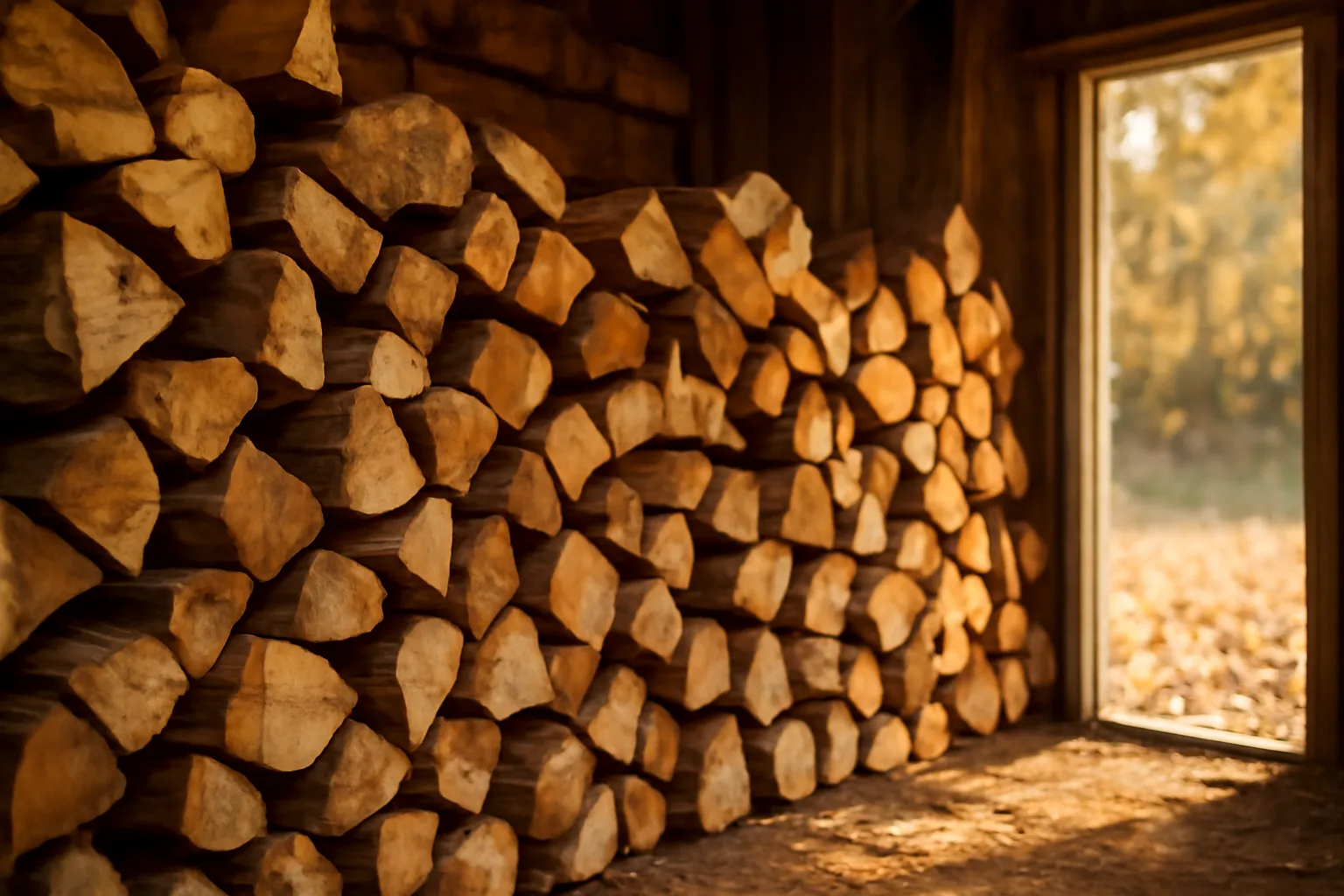
TL;DR
Kiln-dried firewood in Alabama retails between $250 and $450 per full cord, with half-cords and bundles priced higher per unit. No statewide firewood dealer license exists, but sellers moving wood across county or state lines must follow Alabama Forestry Commission quarantine rules. Kiln heat treatment to USDA standards takes about 75 minutes at a 160°F core temperature, or 4 to 8 hours per full cycle.
How much does kiln firewood cost in Alabama?
A full cord of kiln-dried firewood in Alabama runs between $250 and $450. Price moves with species, split size, delivery distance, and whether you buy from a small local producer or a regional retailer. That range tracks what USDA Forest Service fuelwood market work has documented across the Southeast: processed, dried hardwood sells well above green or air-dried wood because the seller has to cover kiln fuel, labor, and the moisture loss that shrinks the weight they're selling. [1]
Species matters a lot. Oak and hickory are Alabama's most commonly sold firewood, and both are dense and slow to dry, so kilning them burns more time and energy than pine. A cord of kiln-dried red oak usually prices at the top of the range. Kiln-dried pine, popular for kindling and quick-start fires, can land under $250 a cord when supply is good.
Fractional units are where most buyers actually shop. A half-cord runs roughly $130 to $240 in most Alabama markets. A face cord (about one-third of a full cord) is typically $80 to $160. Bundled kiln-dried wood at gas stations, grocery stores, and campgrounds runs $7 to $10 for a small bundle of roughly 1 cubic foot, which works out to several hundred dollars per equivalent cord. Bundles are convenient. They are a terrible deal per unit of heat.
Delivery adds $25 to $75 in most markets, depending on distance. In Birmingham, Huntsville, or Mobile, same-county delivery sits on the low end. Rural counties push that number up fast.
What drives kiln firewood prices higher than green or air-dried wood?
Energy and time. That's the short answer. Kiln drying to USDA heat-treatment standards (160°F internal for 75 minutes, or an equivalent time-temperature combination) takes real energy input, whether the producer runs a propane-fired kiln, a wood-waste-fired system, or a solar-assisted dehumidification unit. [2] That cost lands on the buyer.
Then there's weight loss. Green oak can run 60 to 70 percent moisture content. Kiln-dried firewood sold for heat typically lands at 15 to 20 percent. [3] The wood is literally lighter after drying, so a seller who prices by weight is handing you less mass for more process. Most Alabama sellers price by cord or fraction of cord, which measures volume, but the weight gap is still real: you get less water and more combustible material per cubic foot.
Some producers pass through a certification cost. USDA APHIS has rules for heat-treated wood moving under federal quarantine orders, and sellers who want the official compliance mark have to get their kiln and process approved. [2] That inspection overhead is small but real.
Demand timing matters too. The Alabama firewood season runs roughly October through February, with the northern counties seeing longer cold snaps. Prices peak in November and December. Buy in late summer or early fall and you'll often find producers willing to deal, especially on large orders.
For a side-by-side view of how kiln-dried wood prices in Alabama compare to neighbors like kiln firewood cost in Georgia or kiln firewood cost in Florida, the drivers are similar. Species mix and season length shift the numbers.
Do you need a license to sell kiln firewood in Alabama?
There's no Alabama-specific firewood dealer license at the state level. You don't file an application with one agency and walk away with a "kiln firewood seller" credential. What you deal with instead is a set of overlapping rules that hinge on where your wood comes from and where it's going.
The Alabama Forestry Commission runs the state's compliance with federal and state quarantine rules for wood-boring insects, including the emerald ash borer, spotted lanternfly, and other regulated pests. Moving firewood out of a quarantine county or across state lines without proper documentation or treatment breaks both state and federal rules. [4] Alabama has had emerald ash borer quarantines in effect in parts of the state, and the county list changes, so confirm directly with the Commission before you move wood.
If your kiln-dried wood meets USDA APHIS heat-treatment standards and you want the compliance mark (which tells buyers the wood is federally cleared for interstate movement), you need an approved compliance agreement with APHIS. [2] That's a federal process, not a state license.
For basic in-state sales in non-quarantined areas, there's no firewood-specific permit. You need what any small business needs: a business license from your city or county, and registration with the Alabama Department of Revenue if you collect sales tax on retail sales. Alabama levies a 4 percent state sales tax; local add-ons vary. [5]
The practical checklist for a new Alabama kiln firewood seller looks like this:
1. Confirm your source county's quarantine status with the Alabama Forestry Commission. 2. Register your business with the Alabama Department of Revenue for sales tax. 3. Get a local business license from your city or county probate office. 4. If you want to move wood interstate or use the USDA heat-treatment mark, pursue a USDA APHIS compliance agreement.
None of that is complicated. Skipping the quarantine check is the real risk. Federal pest quarantine violations can carry substantial fines.
How long does kiln firewood take in Alabama?
The heat-treatment portion of the kiln cycle is short. USDA APHIS standards call for 160°F at the wood's core for a minimum of 75 consecutive minutes. [2] Once the kiln hits target temperature, you're done in just over an hour. The full cycle, including heat-up and cool-down, usually runs 4 to 8 hours depending on kiln design, species, and starting moisture content.
That's not the whole story. Starting with green wood, you have to pre-dry it before or during kilning to get moisture down to a level buyers expect (usually 20 percent or below, ideally 15 percent for premium product). [3] Green hardwood fresh off the log can take 2 to 6 weeks of air drying before it's kiln-ready, or you can stretch the kiln cycle to do most of that drying. Extended low-temperature kiln drying for moisture reduction (not the short high-temperature pest kill) can take 24 to 72 hours in a commercial dehumidification kiln.
Alabama's climate matters here. High summer humidity slows air drying and breeds surface mold on wood stored outside, which is one reason some Gulf Coast producers lean harder on kiln drying than on extended air drying. If you air dry before kilning, plan for longer pre-dry times in Mobile or Baldwin County than in the drier northern counties around Madison or DeKalb.
For buyers, the timeline is simpler: kiln-dried firewood burns the day you get it. That's the whole point. You're paying for moisture under 20 percent, cleaner combustion, and less creosote in your flue. [3]
How do Alabama firewood prices compare to neighboring states?
Alabama's retail kiln firewood prices sit in the middle of the Southeast range. Georgia and Florida, with longer tourist and camping seasons and steady demand from vacation-area buyers, run slightly higher on retail bundles. Arkansas, with a bigger timber industry and lower rural labor costs, often comes in a bit lower per cord on bulk orders.
The table below shows approximate retail cord prices for kiln-dried hardwood across the region, based on market surveys and extension data. These are estimates, not locked figures, and local conditions vary.
| State | Approx. full cord (kiln-dried hardwood) | Notes |
|---|---|---|
| Alabama | $250, $450 | Oak dominant, delivery adds cost |
| Georgia | $275, $475 | Higher demand near Atlanta metro |
| Florida | $300, $500 | Shorter season, import costs |
| Arkansas | $200, $380 | Strong local timber supply |
| Tennessee | $240, $420 | Similar species mix to Alabama |
These figures reflect retail sales, not wholesale or producer-direct pricing, which runs 20 to 40 percent lower. [1]
For a closer look at neighboring states, see kiln firewood cost in Arkansas and kiln firewood cost in Georgia.
What wood species are used for kiln firewood in Alabama?
Alabama's forests run mostly hardwood in the central and northern counties, with mixed pine-hardwood in the south. That shapes what shows up in the kiln firewood market.
Oak is king. Red oak, white oak, and chestnut oak are the most commonly sold kiln-dried firewood species in the state. They're dense (a cord of white oak weighs roughly 4,200 pounds green), put out high BTU, and are what most buyers expect when they order "a cord of firewood" in Alabama. [6] Hickory sells as a premium product, often marketed for cooking and smoking. It commands the highest price per cord kiln-dried.
Split and seasoned pine, particularly loblolly from the southern counties, shows up too, usually as starter wood or kindling. Pine kilns fast thanks to lower density and resin content, but it's not the primary product for most Alabama producers.
Mixed hardwood loads (maple, sweetgum, or tulip poplar alongside oak) are common from small producers processing their own timber rather than buying logs for firewood. These run on the lower end because heat output per cord falls below pure oak or hickory.
What moisture content standard should kiln firewood meet in Alabama?
Alabama has no state-mandated moisture content standard for retail firewood. That's common nationally. Most states leave moisture labeling to market forces and the seller's honesty.
The practical industry standard, and what USDA extension guidance recommends for efficient combustion, is 20 percent moisture content or below, measured with a calibrated pin-type or pinless moisture meter. [3] Wood above 25 percent is generally not ready to burn: it hisses, smokes heavily, throws less heat, and builds creosote faster in your chimney.
If you're buying kiln-dried firewood in Alabama and the seller calls it "seasoned" or "dry" without a moisture number, that's a flag. Ask for a reading or bring a cheap meter yourself. A decent pin-type meter costs $20 to $30 and pays for itself the first time it catches a load of wet wood sold as kiln-dried.
For sellers, honest moisture labeling is good business and, under general consumer protection law, part of accurate product representation. The Alabama Deceptive Trade Practices Act prohibits deceptive trade practices, which can include false claims about product specifications. [7]
FirewoodPath's $129 Moisture + Cord + HOA Kit covers the documentation side for producers and buyers who need a paper trail for moisture verification and cord measurement. That matters most for sellers marketing to HOA communities or campgrounds that require proof of compliance.
What are the cord measurement rules for selling firewood in Alabama?
A legal cord of firewood in Alabama is 128 cubic feet of stacked wood, a 4x4x8 foot stack. Alabama follows the standard cord definition the National Institute of Standards and Technology sets out in Handbook 130, the model firewood regulation states adopt. [8]
Sellers who use "face cord," "rick," "half cord," or "truckload" without stating the actual cubic footage are in a gray area. Handbook 130's method of sale rules require any unit used in a firewood sale to be defined accurately. A "rick" has no fixed legal definition; if you sell a rick, tell the buyer the exact dimensions you're using. [8]
Short measure, whether from loose stacking or a vague unit name, is a common complaint to state weights and measures offices across the South. Alabama's Department of Agriculture and Industries handles these complaints, inspects, and can penalize short measure.
If you're a buyer who suspects short measure on a kiln-dried delivery, you can file a complaint with the Alabama Department of Agriculture and Industries. Photograph the stack and its dimensions before you pay, if you can.
What equipment do Alabama kiln firewood producers use?
The most common setup for small to mid-size Alabama producers is a modified shipping container kiln or a purpose-built insulated wood chamber with a propane or diesel burner and forced-air circulation. These units typically hold 1 to 4 cords per cycle and can hit the 160°F USDA target within 2 to 4 hours depending on ambient conditions. [2]
Larger producers, especially those tied to sawmill operations in the Alabama Piedmont or near the Bankhead National Forest, sometimes run bigger batch kilns or continuous kilns fueled by wood waste, which cuts fuel cost hard. If you run a sawmill with a chip or shaving waste stream, a wood-fired kiln makes obvious economic sense.
Solar-assisted dehumidification kilns show up with a smaller number of Alabama producers. They're cheap to run but slow, and the drying times (several days to a week per batch) make them hard to scale unless you have real pre-dry storage. In Alabama's humid summers, dehumidification kilns struggle to hit low moisture targets without supplemental heat.
Moisture meters are standard for any serious producer. A professional-grade pin meter with species correction factors runs $60 to $200 depending on brand. Some producers add resistance-based or microwave meters for faster non-destructive testing of stacked cords.
For how equipment costs scale with volume, the comparable setups in kiln firewood cost in Colorado or kiln firewood cost in California show the same equipment categories, with regional variation in kiln fuel type.
Where can you buy kiln-dried firewood in Alabama?
The easiest places to find kiln-dried firewood in Alabama are local classified boards (Facebook Marketplace, Craigslist), feed and farm stores, and dedicated firewood yards, mostly in the Huntsville, Birmingham, and Montgomery metro areas. In rural counties, word of mouth and roadside stands still carry the market.
Big home improvement retailers (Home Depot, Lowe's) sell kiln-dried bundles in stores, but those are small bundles priced for convenience, not for heating a home through winter. Fine for a campfire or a few fireplace evenings. Anyone heating primarily with wood needs bulk cord delivery, full stop.
Some Alabama Christmas tree farms and rural small businesses sell kiln-dried firewood as an off-season revenue stream, particularly in the northern counties. These can be good sources for reasonably priced kiln-dried oak if you call in late summer or early fall before prices peak.
FirewoodPath's resource library covers the documentation and compliance side for buyers and small producers working this market. For paper documentation needs, /start pulls what the site offers into one place.
Alabama quarantine rules and moving firewood across county lines
This is the section most buyers and small sellers skip, and it's the one that creates real legal exposure.
Alabama sits in the path of the emerald ash borer (EAB) expansion moving through the Southeast. USDA APHIS and the Alabama Forestry Commission have issued and updated county-level quarantine orders for EAB, which restrict movement of firewood, ash nursery stock, and other regulated materials out of quarantined counties without treatment documentation. [4]
USDA APHIS Plant Protection and Quarantine states plainly that it is illegal to move regulated articles from a quarantined area without proper documentation or treatment. [4] Heat-treated firewood meeting USDA standards (160°F internal for 75 minutes) is exempt from movement restrictions when properly documented, which is one practical reason commercial producers go through the compliance agreement process.
For a hobbyist cutting wood on their own land and burning it at home, quarantine rules are mostly academic. They get real the moment you sell, haul across county lines, or take firewood out of state. Alabama also joins the "Don't Move Firewood" campaign that the USDA Forest Service coordinates nationally. [9]
Check the current Alabama Forestry Commission quarantine map before you haul. It updates as the EAB boundary shifts, and the map from two years ago may not match current reality.
Frequently asked questions
Do you need a license for kiln firewood in Alabama?
There's no single statewide "kiln firewood license" in Alabama. You need a standard city or county business license, Alabama Department of Revenue sales tax registration, and compliance with Alabama Forestry Commission quarantine rules if your wood crosses county or state lines. For the USDA heat-treatment compliance mark on interstate sales, you need a separate USDA APHIS compliance agreement. None of these are unique to firewood.
How much does kiln firewood cost in Alabama per cord?
Retail prices for a full cord of kiln-dried hardwood in Alabama run roughly $250 to $450. Oak and hickory sit at the top of that range. Mixed hardwood or pine comes in lower. Delivery typically adds $25 to $75 by distance. Prices peak in November and December; buying in late summer or early fall gets better deals from producers managing inventory.
How long does kiln drying firewood take in Alabama?
The USDA heat-treatment cycle needs 160°F at the wood's core for 75 consecutive minutes. With heat-up and cool-down, a full kiln cycle runs 4 to 8 hours. Starting with green wood, pre-drying adds days or weeks. Alabama's high humidity slows outdoor air drying, especially in the Gulf Coast counties, so many producers use extended kiln cycles or indoor storage before the final heat treatment.
What moisture content should kiln-dried firewood in Alabama have?
Industry standard and USDA extension guidance put ready-to-burn firewood at 20 percent moisture content or below, ideally 15 percent for clean combustion. Alabama has no state-mandated moisture law for retail firewood, so the honest move is to check yourself with a pin-type moisture meter. A good meter costs $20 to $30 and confirms what you're actually buying.
Can you move kiln-dried firewood out of Alabama to another state?
Kiln-dried firewood meeting USDA APHIS heat-treatment standards (160°F internal for 75 minutes) can legally move across state lines with proper documentation. Untreated or undocumented firewood from quarantined counties cannot. You need a USDA APHIS compliance agreement to use the official heat-treatment mark. Check current quarantine county status with the Alabama Forestry Commission before hauling.
Is a half cord of kiln firewood enough for a winter in Alabama?
For most Alabama homes using a fireplace to supplement central heat, a half cord (roughly 64 cubic feet stacked) gets through a typical winter in the central or southern part of the state. Northern Alabama, which sees harder winters, may need a full cord or more for primary heating. A half cord of kiln-dried hardwood typically costs $130 to $240 in Alabama.
What's the difference between a cord, face cord, and rick of firewood in Alabama?
A legal cord in Alabama is 128 cubic feet of stacked wood, typically 4x4x8 feet. A face cord is roughly one-third of that: 4 feet tall, 8 feet long, and one log length (usually 16 inches) deep. A "rick" has no fixed legal definition in Alabama or most states. If a seller uses "rick," ask for the exact dimensions. Short measure is the most common firewood complaint to state weights and measures offices.
Do Alabama kiln firewood sellers have to register with the state?
Alabama kiln firewood sellers must register with the Alabama Department of Revenue to collect and remit sales tax on retail sales. That's a standard small business requirement, not firewood-specific. Local business licensing through your city or county probate office is also required. There's no separate state-level firewood producer registry or license beyond these general business requirements.
What wood species are best for kiln-dried firewood in Alabama?
White oak and red oak dominate Alabama kiln firewood because of their high BTU output and wide availability. Hickory commands the highest price and is popular for cooking smoke. Mixed hardwood loads including maple, sweetgum, and tulip poplar are common from small producers and cost less per cord, though heat output per cord falls below pure oak. Pine is available but sold mainly as kindling.
How do I report a short cord or fraudulent firewood delivery in Alabama?
File a complaint with the Alabama Department of Agriculture and Industries, which enforces weights and measures law including cord measurement standards. Document the stack with photos and measurements before or immediately after delivery. The Alabama Forestry Commission handles pest-related complaints for quarantine violations. Alabama defines a legal cord as 128 cubic feet; sellers using vague terms like "rick" or "truckload" without dimensions are in a gray area the agency can investigate.
Does the emerald ash borer quarantine affect firewood sales in Alabama?
Yes. Parts of Alabama fall under USDA APHIS emerald ash borer quarantine, which restricts movement of untreated firewood out of affected counties. Kiln-dried firewood meeting federal heat-treatment standards is exempt when properly documented. The quarantined county list changes as EAB spreads; confirm current status with the Alabama Forestry Commission before moving or selling wood across county lines.
What is the USDA heat-treatment standard for firewood?
USDA APHIS requires compliant heat-treated firewood to reach 160°F at its core and hold that temperature for a minimum of 75 consecutive minutes. The standard kills regulated wood-boring insects and their eggs and larvae. Producers who complete this treatment and hold an APHIS compliance agreement can label wood as federally certified heat-treated, which allows unrestricted interstate movement.
Are there bulk discounts for kiln firewood in Alabama?
Most Alabama producers offer informal bulk discounts on orders of 2 cords or more, typically 10 to 20 percent off the single-cord retail price. Buying directly from a producer instead of a retailer saves another 20 to 40 percent. Timing helps too: orders placed in July or August, ahead of peak demand, often beat November pricing when producers hold the stronger hand.
How does kiln firewood cost in Alabama compare to Arkansas or Georgia?
Alabama sits in the middle of the Southeast range. Arkansas, with a larger and cheaper timber supply, often runs $50 to $70 less per cord on bulk kiln-dried hardwood. Georgia, particularly near the Atlanta metro, runs $25 to $50 more per cord on higher urban demand. Florida prices are typically the highest in the region because most firewood is imported from other states.
Sources
- USDA Forest Service, Southern Research Station, Fuelwood Markets in the United States: Retail prices for processed, dried hardwood firewood in the Southeast exceed green or air-dried wood prices due to energy, labor, and moisture-loss costs.
- USDA Forest Service, Forest Products Laboratory, Drying Firewood (General Technical Report FPL-GTR-41): Firewood at or below 20 percent moisture content burns more efficiently and produces less creosote; green wood can exceed 60 percent moisture content and is not ready to burn.
- Alabama Department of Revenue, Sales and Use Tax: Alabama levies a 4 percent state sales tax on retail sales; local add-on rates vary by jurisdiction.
- USDA Forest Service, Forest Products Laboratory, Wood Handbook: Wood as an Engineering Material (Chapter 2, Physical Properties): White oak has a green weight of approximately 4,200 pounds per cord and high BTU output, making it a premium firewood species.
- Alabama Code, Title 8, Chapter 19, Deceptive Trade Practices Act: The Alabama Deceptive Trade Practices Act prohibits deceptive trade practices, which includes false product specification claims such as misrepresenting moisture content of firewood.
- NIST, Weights and Measures Publications, Handbook 130: A legal cord of firewood is 128 cubic feet of stacked wood; the method of sale regulation requires accurate unit definitions in firewood sales.
- USDA Forest Service, Forest Health Protection: Alabama participates in the USDA Forest Service Don't Move Firewood campaign to reduce spread of invasive wood-boring pests via transported firewood.
- Alabama Forestry Commission: The Alabama Forestry Commission administers state compliance with federal and state quarantine rules for regulated wood-boring insects including the emerald ash borer.