Last updated 2026-08-18
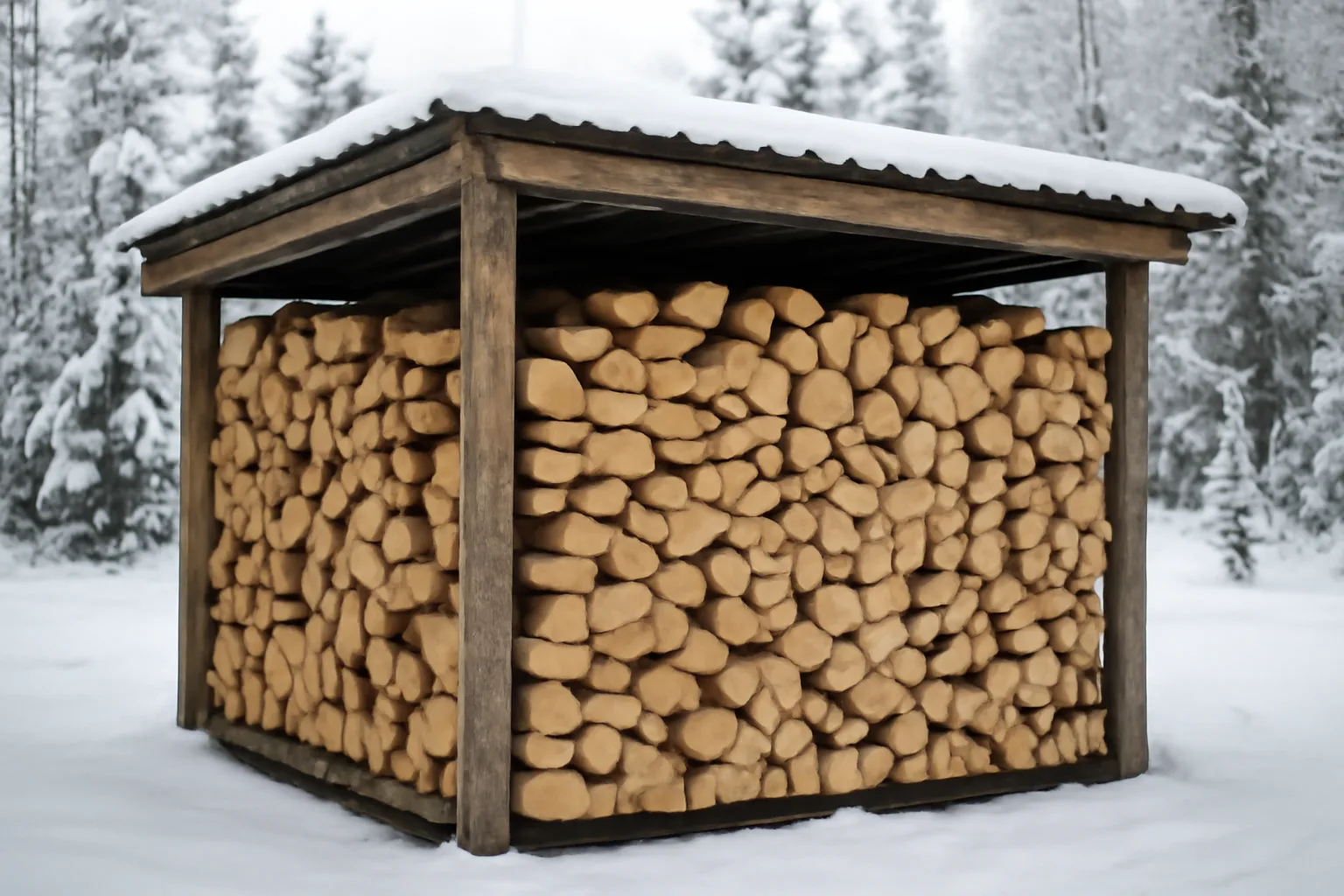
TL;DR
Kiln-dried firewood in Alaska typically costs $350 to $600 or more per cord at retail, roughly 30 to 60% above green or air-dried wood prices, largely because of Alaska's high energy costs, long transport distances, and short selling season. No statewide kiln firewood dealer license exists, but commercial firewood sellers must comply with Alaska's weights-and-measures cord measurement rules and any applicable borough business licenses.
How much does kiln firewood cost in Alaska?
Kiln-dried firewood in Alaska runs roughly $350 to $600 per cord at retail. In remote communities reachable only by ferry or small plane, delivered prices push past $700. That spread is the whole story. Anchorage, Fairbanks, and the Kenai Peninsula have enough suppliers that competition holds prices near the low end, while Southeast towns like Ketchikan and Sitka pay a lot more once freight is added.
Green or air-dried firewood in Alaska sells for roughly $200 to $350 per cord depending on species and location [1]. The kiln premium exists because running a kiln here is expensive. Alaska has some of the highest commercial electricity rates in the country, averaging around 21 cents per kWh for commercial customers in recent years, against a U.S. commercial average closer to 12 cents [2]. Propane and heating oil, which many rural kilns burn, swing even harder.
Birch is the wood people want. It burns hot, throws little creosote, and splits clean. Spruce and cottonwood sell cheaper, but birch runs $30 to $80 per cord over mixed or softwood loads. Confirm the species before money changes hands. Alaska's wood identification is informal, and a load of cottonwood sold as birch is a real complaint you'll hear from buyers.
Buying for home heat rather than camping or an HOA rule? Verify moisture directly. A good supplier shows you a reading at or below 20% on a pin-type meter before you pay. The USDA Forest Service recommends below 20% for efficient combustion [3].
What makes kiln firewood more expensive in Alaska than in other states?
Three cost drivers stack on each other in Alaska in a way the lower 48 never sees at the same intensity. Energy, freight, and a short selling window.
Start with energy. Commercial electricity in Anchorage runs above the national average, and in communities served by diesel generation it hits 50 to 70 cents per kWh or more [2]. A kiln pulling 50 to 100 kW for 24 to 72 hours per batch racks up fast.
Then logistics. Most kiln equipment, replacement parts, and even some finished wood arrives by barge or air freight. The Alaska Marine Highway System and private barge operators charge rates built on distance and thin infrastructure, not lower-48 trucking economics. A cord that ships $80 from a Midwest mill to a dealer can cost several times that to move inside Alaska.
And the selling season is short. Alaska's firewood demand peaks hard in fall, roughly August through October, so suppliers have a narrow window to recoup kiln operating costs and overhead. A year-round market would smooth that out. Alaska's doesn't.
For buyers outside Anchorage or Fairbanks, budget $500 or more per cord for birch kiln firewood, delivered. Nobody in the Alaska firewood trade publishes clean cost-per-cord data. The figures here come from Alaska energy price data [2] and observed retail patterns, not a formal market survey. Confirm current prices with local suppliers.
See how Alaska's costs compare to a more competitive lower-48 market: kiln firewood cost in Colorado or kiln firewood cost in Idaho.
Do you need a license to sell kiln firewood in Alaska?
No Alaska statewide license exists specifically for selling kiln-dried firewood. That's the short answer. The longer answer is that several overlapping requirements apply depending on your borough, your scale, and whether you cut the wood yourself.
At the state level, Alaska's Weights and Measures program under the Division of Measurement Standards requires that firewood sold commercially be measured and represented accurately. A "cord" is legally 128 cubic feet of stacked wood [4]. Selling by terms like "truckload," "face cord," or "rick" without disclosing how they relate to a full cord can trigger a violation. Review the Division of Measurement Standards guidance before you post a price.
Borough business licenses vary a lot. The Municipality of Anchorage requires a business license for any commercial activity inside its boundaries. The Fairbanks North Star Borough has its own rules. Other boroughs and unorganized areas may require different things or nothing at all. No single statewide database maps every borough's licensing, so call your borough or city clerk.
Cutting timber to kiln and sell is a separate layer entirely. Harvesting from Alaska state land requires a timber sale permit from the Alaska Division of Forestry [5]. Federal land, including the Tongass and Chugach National Forests, requires authorization from the U.S. Forest Service [6]. Personal-use firewood permits on federal land cover small quantities and don't allow commercial sales.
For HOA communities or campgrounds that want documented moisture content, the paperwork is where most people trip, not the license. FirewoodPath's Moisture + Cord + HOA Kit at /start covers the documentation package for exactly that.
How long does kiln drying firewood take in Alaska?
A commercial firewood kiln in Alaska, running at normal temperatures (typically 130 to 160°F for heat-treating, or 250°F+ for a standard drying kiln), dries split birch from green to below 20% moisture in roughly 48 to 96 hours of active kiln time [3]. Thicker splits, denser loads, and lower internal temperatures all push the cycle longer.
The Alaska wrinkle is what happens before and after the kiln. Green birch felled in spring or summer has to be bucked, split, and staged before loading. In a normal year that pre-processing takes weeks of outdoor handling. Alaska's short warm season means you're racing to process wood before freeze-up complicates everything. Frozen green wood does not kiln-dry efficiently. Kilns burn more energy and cycles stretch when you start from frozen material.
Air drying before the kiln is a strategy some operators use. Stack split wood through summer, then run it through in August or September, and you cut kiln time and energy cost. After a summer in Interior Alaska's low-humidity air, birch can drop from 50%+ green moisture to 30 to 35% before it ever enters a kiln, which roughly halves cycle time.
Southeast Alaska has the opposite problem. High humidity and constant rain make outdoor pre-drying nearly useless. Operators there often go green straight to kiln with no meaningful pre-dry, part of why kiln firewood is both rarer and more expensive in the panhandle.
The buyer takeaway is simple. Ask when the wood was kilned and whether it's been stored covered since. Kiln-dried wood re-absorbs moisture if stored badly, and Alaska's climate is unforgiving on that.
Alaska cord measurement rules: what sellers and buyers need to know
Alaska uses the standard legal cord: 128 cubic feet of stacked, ranked wood, matching the National Institute of Standards and Technology (NIST) Handbook 130 [7]. The Alaska Division of Measurement Standards enforces that definition for commercial sales.
Sellers who advertise "face cords" or "half cords" must make the fraction clear at the point of sale. A face cord is usually one-third of a full cord (roughly 42 to 44 cubic feet) when cut to 16-inch lengths, but it isn't a legally standardized unit in Alaska. Quoting it without context is a measurement violation risk.
For buyers, the most common dispute is short measure. A pickup load almost never holds a full cord. A standard 8-foot truck bed holds roughly 0.5 to 0.7 cords of loosely thrown, unsplit wood. Stacked, split birch packs tighter but still rarely hits a full cord per load. If you're buying a cord, expect delivery in a dedicated firewood truck with a stacked volume you can check, or stack it yourself and measure the result.
NIST Handbook 130 states: "A cord of wood is the amount of wood contained in a space of 4 feet × 4 feet × 8 feet" [7]. That's 128 cubic feet of gross stack volume including air gaps, not 128 cubic feet of solid wood. Keep that distinction straight when you dispute a delivery.
Kiln firewood on Alaska state and federal land: harvesting rules
Planning to source wood from public land instead of private timber? The permitting path is layered, and it's worth understanding before you buy equipment.
Alaska state forest land is managed by the Alaska Division of Forestry and Fire Protection. Commercial timber harvest requires a timber sale contract [5]. There are no blanket permits for commercial firewood cutting. You go through the sale process. Personal-use cutting permits exist, but they cap volumes well below what a commercial operation needs and explicitly prohibit resale.
Federal land follows different rules by agency. The Tongass National Forest covers most of Southeast Alaska, and the Chugach National Forest covers South-Central. Both are managed by the U.S. Forest Service. Fuelwood cutting permits are available for personal use under the free-use permit system [6], but commercial firewood operations need a special-use authorization and often a timber sale contract. Specific requirements and current fees are set at the forest level, so contact the ranger district directly.
Bureau of Land Management (BLM) land in Alaska, in the Interior and on the Kenai Peninsula, offers personal-use wood cutting permits [8]. Commercial operations on BLM land require separate authorization. BLM Alaska's firewood program covers personal use only in most management areas.
Selling kiln firewood from private timber or private land skips all of this. Many Alaska kiln operators source from private land clearing, storm damage removal, or direct timber purchases from private landowners, which sidesteps the permitting chain entirely.
Alaska energy costs and their effect on kiln operating expenses
Running a kiln in Alaska is not cheap, and the math shapes every cord price on the market. Understanding the energy context tells you whether a price is reasonable or inflated.
Alaska's commercial electricity rates in 2023 averaged about 21.36 cents per kWh statewide, per the U.S. Energy Information Administration [2]. That's well above the U.S. commercial average of 12.42 cents for the same period. Rural communities on diesel generation pay 50 to 70 cents per kWh or more, which is why commercial kilns cluster in Anchorage and Fairbanks where the grid is cheaper.
Run the numbers. A small commercial kiln rated at 50 kW on a 72-hour cycle burns 3,600 kWh per batch. At 21 cents per kWh, that's $756 in electricity for one batch. If the batch makes 3 to 4 cords, energy alone costs roughly $190 to $250 per cord before labor, depreciation, wood cost, or overhead. That's why kiln firewood in Alaska starts well above air-dried.
Propane-fired kilns change the calculation, but Alaska propane prices swing too. Heating oil kilns are common in rural areas. Some operators fuel their kilns with waste wood or biomass, which shifts the economics but takes different equipment.
Here's the buyer test. If you see kiln-dried birch at $280 per cord in Anchorage, ask questions. Either the supplier is running below cost to buy market share, the moisture isn't verified, or the math doesn't add up. A reputable Alaska operator with documented moisture readings rarely undercuts $350 per cord for long.
HOA and campground documentation requirements for kiln firewood in Alaska
Alaska has no statewide HOA firewood law the way some states mandate kiln treatment through invasive-species transport rules. Individual homeowners associations, state campgrounds, and federal campgrounds set their own wood import or moisture rules.
Alaska State Parks campgrounds generally follow Department of Natural Resources guidance, which encourages locally sourced firewood to limit pest spread but does not uniformly mandate kiln treatment [9]. U.S. Forest Service campgrounds and National Park Service units in Alaska may add restrictions, especially in areas managing spruce bark beetle or other forest health concerns. Check the specific campground or ranger district.
For HOAs, the paperwork is usually a signed heat-treatment certificate or a moisture reading at delivery. A kiln certificate should state the internal wood temperature reached and how long it held. The USDA APHIS heat treatment standard for wood packaging and firewood requires wood reach 56°C (133°F) for 30 continuous minutes throughout the profile [10]. Many HOAs cite this standard even though it's primarily a federal phytosanitary rule.
If you're the seller who has to provide that, a consistent template recording batch date, species, kiln temperature, moisture reading, and cord volume is what buyers and HOA boards actually want. FirewoodPath's kit at /start is built around that paper path. Most HOA boards aren't wood scientists. They want a document that looks official and covers the key numbers.
Price comparison: kiln vs. green firewood costs across Alaska regions
Alaska's geography creates real price variation that a single statewide average hides. The table compares rough ranges by region based on reported market conditions and Alaska energy data. These are estimated retail ranges, not survey data. Prices shift with fuel costs, seasonal demand, and how many suppliers work an area. Confirm current prices with local suppliers.
| Region | Green/Air-Dried (per cord) | Kiln-Dried (per cord) | Notes |
|---|---|---|---|
| Anchorage / Mat-Su | $200, $300 | $350, $500 | Most competitive market |
| Fairbanks / Interior | $180, $280 | $330, $480 | Interior birch abundant |
| Kenai Peninsula | $220, $320 | $370, $530 | Some ferry logistics |
| Southeast Alaska | $280, $400 | $500, $700+ | High humidity, ferry/air freight |
| Rural / Bush Alaska | $300, $500+ | $600, $900+ | Diesel generation, air freight |
Birch runs $30 to $80 per cord over spruce or cottonwood across all regions. Delivered pricing adds $40 to $100 depending on distance. Split and stacked adds another $30 to $60 over split-but-unloaded pricing in most areas.
For comparison to other states with compressed kiln seasons and high energy costs, see kiln firewood cost in California and kiln firewood cost in Hawaii.
What does a kiln firewood operation in Alaska actually need to get started?
Getting into kiln firewood in Alaska isn't impossible, but the capital is higher than in most states and the operating season is short. Here's the realistic path.
Equipment first. A small commercial firewood kiln handling 2 to 4 cords per batch costs roughly $15,000 to $50,000 new depending on size and fuel type. Used kilns turn up, but Alaska's small market means fewer options. Add a firewood processor ($8,000 to $25,000 for a decent hydraulic unit), a splitter, and material handling gear.
Wood supply. Sourcing from private land or private timber purchases is the cleanest path. Figure $40 to $120 per cord for green birch in standing timber or freshly felled, depending on location and quantity.
Licensing. Apply for a borough business license in your operating area. Register with the Alaska Division of Measurement Standards if you sell by cord. If you harvest from state or federal land, start permit applications early. State timber sale timelines vary and can take months.
Insurance. Commercial general liability, and if you hire anyone, Alaska workers' compensation. Alaska requires workers' compensation for essentially all employees [11]. This one is not optional.
On the documentation side, having standardized moisture certificates, cord measurement records, and heat treatment logs ready before your first sale saves real headaches, especially selling to HOAs, campgrounds, or commercial buyers who verify claims. That's where a structured documentation kit earns its keep in year one.
See how entry costs compare in other western states: kiln firewood cost in Idaho and kiln firewood cost in Colorado.
Frequently asked questions
How much does a cord of kiln-dried birch cost in Anchorage?
Kiln-dried birch in Anchorage typically runs $350 to $500 per cord at retail, delivered. That's higher than green or air-dried birch at $200, $300 per cord, reflecting kiln energy costs at Alaska's above-average commercial electricity rates. Prices shift seasonally, with fall demand (August through October) pushing prices toward the top of the range. Get quotes from at least two suppliers and verify moisture content.
Do you need a license to sell firewood in Alaska?
There is no Alaska statewide license specific to selling kiln firewood. Commercial sellers must comply with Alaska's cord measurement rules under the Division of Measurement Standards and obtain any borough-level business license required in their operating area. If sourcing timber from state or federal land, separate timber or fuelwood permits are required. Private land sourcing avoids the public-land permit layer but borough licensing still applies.
How long does it take to kiln-dry firewood in Alaska?
At standard commercial kiln temperatures of 130 to 160°F or higher, split birch dries from green to below 20% moisture in roughly 48 to 96 hours of active kiln time. Pre-drying wood through Alaska's summer before kiln loading can cut cycle time in half. Frozen green wood is harder to dry efficiently and extends cycle times, which is why most Alaska operators try to process before freeze-up.
Is kiln-dried firewood worth the extra cost in Alaska?
For home heating, the efficiency gains from burning wood below 20% moisture content are real: lower creosote buildup, more BTUs per load, and fewer chimney cleanings. In Alaska's climate, creosote accumulation in improperly maintained chimneys is a documented fire risk. Whether the $100, $200 per cord premium over air-dried wood is worth it depends on your stove efficiency, chimney situation, and whether air-dried wood from a reputable local supplier is genuinely dry.
What species of kiln firewood are sold in Alaska?
Birch is the dominant kiln firewood species in Alaska, commanding a premium because of its high BTU output and clean burning properties. Spruce and cottonwood appear in the market at lower price points. Spruce burns faster and produces more resin, making it less ideal for overnight heating. Cottonwood has lower energy density. For heating, birch is worth the extra cost. For campfires or short burns, spruce or a mixed load is usually adequate.
Can you bring kiln firewood into Alaska National Parks or State Parks campgrounds?
Alaska State Parks campgrounds encourage locally sourced firewood but don't uniformly require kiln treatment. Individual National Park Service and U.S. Forest Service campgrounds may have wood import restrictions related to forest health concerns, particularly for spruce bark beetle management. Check with the specific campground or ranger district before bringing kiln firewood from outside the local area. Rules vary by unit and can change seasonally.
How do I verify that kiln firewood is actually dry in Alaska?
Ask for a moisture reading with a pin-type meter at delivery and check several pieces from the interior of the load. Kiln-dried firewood should read at or below 20% moisture content. Surface readings can mislead; probe deeper into a split face. If a supplier won't demonstrate a reading, treat the load as unverified. Some Alaska suppliers provide a written moisture certificate with each delivery; this is the documentation format HOAs and campgrounds typically accept.
What is a legal cord of firewood in Alaska?
Alaska defines a legal cord as 128 cubic feet of stacked, ranked firewood, consistent with the NIST Handbook 130 standard and enforced by the Alaska Division of Measurement Standards. That corresponds to a stack 4 feet high, 4 feet deep, and 8 feet long. Face cords and other fractional units are not legally standardized and must be described clearly at point of sale. A standard pickup truck load rarely equals a full cord.
Do kilns in rural Alaska cost more to operate than in Anchorage?
Yes, significantly. Rural Alaska communities with diesel generation pay 50 to 70 cents per kWh or more for commercial electricity, compared to roughly 21 cents in Anchorage. A 72-hour kiln cycle that costs around $750 in electricity in Anchorage can cost $1,500, $2,500 in a rural diesel-grid community. This is the primary reason kiln-dried firewood is rare in rural Alaska and extremely expensive where it does exist.
Can I harvest timber from Alaska state land for a kiln firewood business?
Commercial timber harvest from Alaska state land requires a timber sale contract through the Alaska Division of Forestry and Fire Protection. Personal use cutting permits exist but prohibit resale and cap volumes well below commercial needs. Federal land under Forest Service or BLM management has separate permit requirements. Many Alaska kiln operators source wood from private land clearing or direct purchases from private landowners to avoid the public-land permit timeline.
How do kiln firewood prices in Alaska compare to other western states?
Alaska kiln firewood is among the most expensive in the country. Lower-48 western states with competitive markets see kiln-dried firewood at $200, $400 per cord in most regions. Alaska's combination of high energy costs, logistics expenses, and a short selling season pushes prices to $350, $600 per cord in accessible areas and significantly higher in remote communities. For comparison, see kiln firewood cost in Idaho or Colorado, where the range runs $250, $400 per cord in most markets.
What documentation do Alaska HOA boards typically require for kiln firewood?
Most HOA boards want a written certificate stating the species, kiln temperature achieved, duration of treatment, date of treatment, and moisture content reading. The USDA APHIS heat treatment standard of 56°C (133°F) for 30 continuous minutes is a common reference point. HOA boards are not wood scientists; a clear, signed document covering those fields is usually sufficient. If you're a seller, having a consistent certificate template ready before your first HOA delivery saves back-and-forth.
Is there an Alaska state inspection program for firewood moisture content?
Alaska does not have a state inspection program specifically for firewood moisture content. The Alaska Division of Measurement Standards enforces cord volume accuracy for commercial sales but does not inspect moisture levels. Moisture verification is essentially buyer-driven: request a reading at delivery. Some campgrounds and HOAs require documented readings as a condition of wood acceptance, which creates a market incentive for sellers to provide certified readings.
Sources
- University of Alaska Fairbanks Cooperative Extension Service: Green and air-dried firewood price ranges and species comparisons for Alaska heating applications
- U.S. Energy Information Administration, Electric Power Monthly, Table 5.6.B Average Retail Price of Electricity by State: Alaska commercial electricity averaged approximately 21.36 cents per kWh in 2023, compared to 12.42 cents national commercial average
- USDA Forest Service: Kiln or well-dried firewood should be below 20% moisture content for efficient combustion; commercial kiln drying times for split hardwood
- Alaska Division of Measurement Standards, Weights and Measures Program: Alaska requires firewood sold commercially to be measured and represented accurately per the legal cord definition of 128 cubic feet
- Alaska Division of Forestry and Fire Protection: Commercial timber harvest from Alaska state land requires a timber sale contract through the Division of Forestry
- U.S. Forest Service, Alaska Region, Forest Products and Permits: Personal use fuelwood cutting permits are available from the U.S. Forest Service in Alaska; commercial operations require special-use authorization
- Bureau of Land Management Alaska: BLM Alaska offers personal use firewood cutting permits; commercial operations require separate authorization
- Alaska Department of Natural Resources, Division of Parks and Outdoor Recreation: Alaska State Parks campgrounds encourage locally sourced firewood to limit pest spread but do not uniformly mandate kiln treatment
- Alaska Workers' Compensation Act, AS 23.30: Alaska requires workers' compensation insurance for essentially all employees under AS 23.30