Last updated 2026-08-19
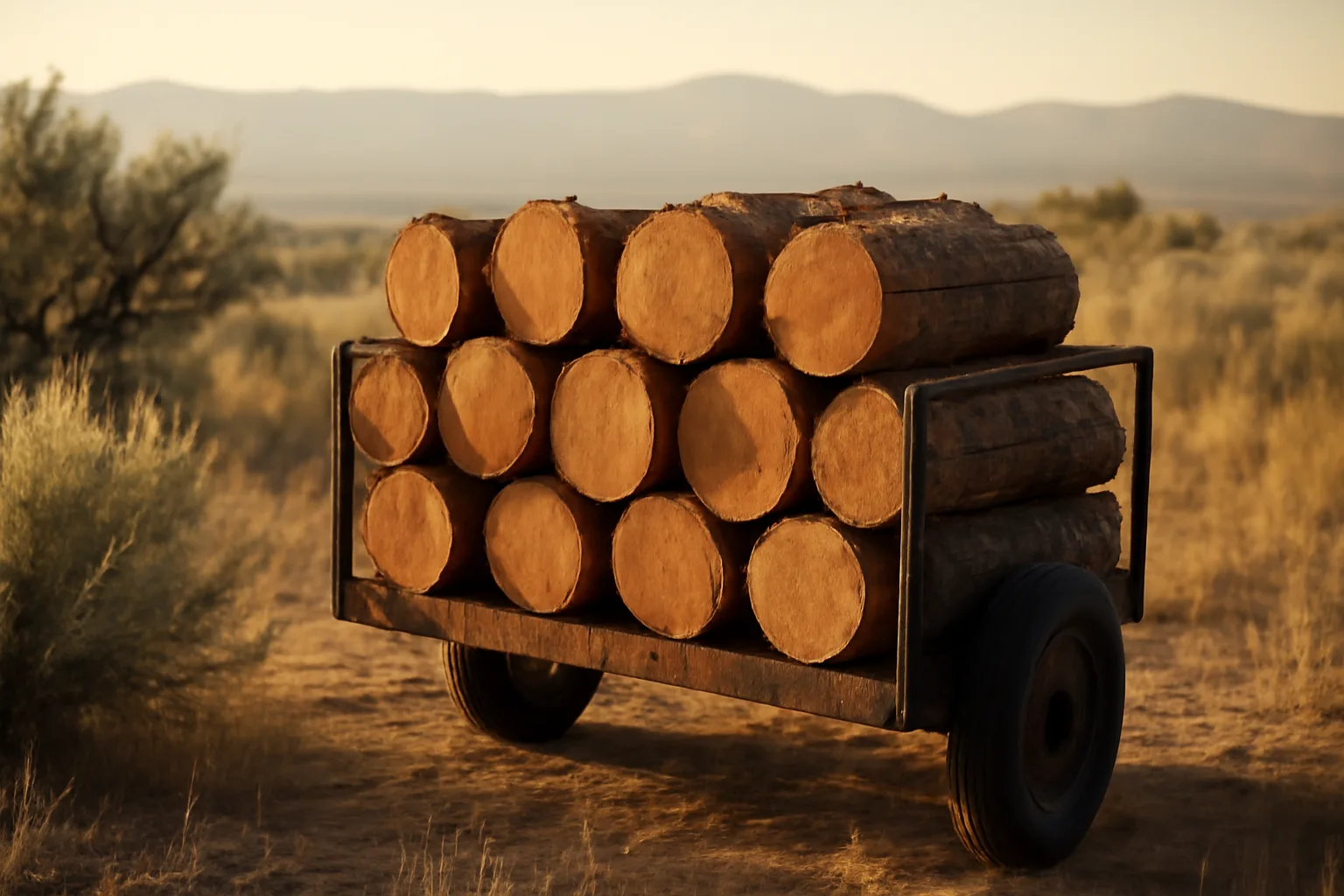
TL;DR
Colorado publishes no kiln-dried cord price, and there is no single state firewood license. Retail prices move with species, delivery, and Front Range versus mountain demand. You sell by the 128 cubic foot cord, collect sales tax if you retail, and confirm county zoning for a kiln. USDA heat treatment is 60 C for 60 minutes at the core. Getting wood under 20 percent moisture still takes days.
How much does kiln firewood cost in Colorado?
Colorado has no official kiln-dried firewood price. There is no state average a buyer, a banker, or a county assessor has to accept. What people pay is a private delivered or stacked number, and it splits hard by species and by whether you sell on the Front Range, along I-70, or on the Western Slope.
Price against live local ads for a full cord, not against a national blog post. A lot of those posts mix face cords, ricks, and 128 cubic foot cords. That mix dumps your margin. NIST Handbook 130 is the method-of-sale document Colorado measurement officials work from. It defines a cord as "the amount of wood that is contained in a space of 128 cubic feet when the wood is ranked and well stowed." [1]
Do not build a year-one pro forma on one magic Colorado cord price. Pull a couple dozen current listings in your delivery radius. Throw out anything that will not state stack dimensions. Then decide if you are selling heat (urban hardwood, oak pockets, ash) or cheap shoulder-season pine. Pine is everywhere in this state. It also loses the heating-value comparison against denser hardwoods, which CSU Extension covers in its firewood fact sheet. [6]
Production cost is the number you can actually control. Logs, cutting, splitting, kiln energy, delivery fuel, breakage, and the unsold leftover ends. Retail asking prices will not save a sloppy yard. If your kiln sits half empty because you chased a cheap green pile that will not dry on schedule, you lose.
Compare notes with other dry-climate states if you like, but do not copy their street prices. Kiln firewood cost in Arizona and kiln firewood cost in Idaho sit in similar West markets and still do not give you a Denver number.
Do you need a license for kiln firewood in Colorado?
No. Colorado does not issue a statewide kiln firewood license. There is no CDA card that says you may dry and sell firewood. That surprises people who came from nursery or produce work.
You still have paper. File an entity with the Colorado Secretary of State if you want the liability box most lenders and landowners expect. [12] Get a sales tax license from the Colorado Department of Revenue if you sell at retail. [5] Colorado's state sales tax rate is 2.9 percent, and local districts stack on top of that. [4] Confirm current local rates in the cities you deliver to. Do not guess.
Measurement Standards at the Colorado Department of Agriculture is the unit that cares how you advertise a cord. [7] Title 35, Article 14 of the Colorado Revised Statutes is the Measurement Standards Act those inspectors work under. [14] If you sell by volume, you play by those rules. Selling a truckload as if it were a defined unit is how you get a bad visit.
Your city or county may want a business license, a home-occupation permit, or a special-use permit for a commercial kiln. That is local. Confirm with planning and the clerk. I would call the county before I poured a slab. A kiln is noisy, it sheds steam, and neighbors complain.
Some people who sell a few cords to friends and never advertise skip half this stack. I would not. The first HOA letter or the first chargeback is when missing paper gets expensive.
| Paper item | Who confirms it | What it is not |
|---|---|---|
| Business entity | Colorado Secretary of State | Not a firewood license |
| Sales tax license | Department of Revenue | Not optional for most retail |
| Cord advertising | CDA Measurement Standards | Not a permit card |
| Kiln sitting on the lot | City or county planning | Not a state kiln permit |
| USFS personal-use wood | That national forest | Not resale inventory |
How long does kiln firewood take in Colorado?
The phytosanitary heat step is short. The USDA treatment schedule used for firewood is a core temperature of 60 C (140 F) held for 60 minutes. [2] That hour kills insects and fungi. It is not the same thing as drying a cord to a moisture content people should burn.
Drying time is the longer clock. In a dedicated firewood kiln, operators commonly run multi-day cycles. I have not seen a peer-reviewed Colorado commercial cycle table. The closest honest statement is that green wood, dense hardwood, and winter loading all stretch the schedule, while Colorado's dry air and a few months of outdoor stickering shrink it. The USDA Forest Products Laboratory Wood Handbook is the reference on how wood gives up water. [11]
Start with already seasoned pine in El Paso County in October and you might only need the heat-treat hold plus a short finish. Start with fresh urban ash in April and you plan on days, not hours. Solar kilns take weeks. A cargo-container box with a proper dehumidifier is usually faster than a backyard greenhouse kiln. Nobody has good public data on Colorado kWh per cord. Log your own meter.
Air dry first. This state's humidity is a gift. EPA Burn Wise still tells households to split, stack, cover, and store wood through a long outdoor season, often framed as at least 6 months, when they are not using a kiln. [3] You pay for the kiln so you can beat that calendar. You are not exempt from physics.
Waste of money: buying a huge kiln before you can keep it full. A half-empty chamber still burns energy.
How long kiln firewood takes also sets how long until you can legally sell. Entity filing and a sales tax license are not clocks I will promise. Confirm current processing with the Secretary of State and Revenue. No article gets to guarantee that.
What does a cord legally mean when you sell firewood in Colorado?
A cord in Colorado sales practice is 128 cubic feet of wood, ranked and well stowed. [1] NIST Handbook 130 says firewood "shall be advertised, offered for sale, and sold only by the cord or fractional parts of a cord," with narrow exceptions for small packaged lots. [1] That sentence is the one I would tape above the phone.
A face cord is not a cord. A rick is not a cord. A pickup heaped above the rails is not a cord. If your ad says a cheap cord and the stack is 8 feet by 4 feet by 16 inches, you are selling about one-third of a cord and asking for a Measurement Standards problem. [7]
I measure every outgoing load. I keep a photo with a tape in the frame. That is boring. It also ends arguments. Packaged bundles sold in grocery lots follow the packaged-goods path, which is a different inspection conversation. Confirm with CDA if your whole plan is bundled sticks at a farm stand.
Do not invent your own unit names. Ranch cord is how people get letters.
If a buyer wants a half cord, sell a half of 128 cubic feet. Write the stack size on the invoice. Colorado inspectors did not invent this to harass you. They inherited a national method-of-sale rule because firewood ads are a magnet for short measure. [1][14]
What does it cost to start a kiln firewood setup in Colorado?
Startup cost is a pile of local quotes, not one statewide number. The kiln is the line item people obsess over. Used cargo containers, purpose-built firewood kilns, and solar sheds live in totally different budgets. I will not post a fake average Colorado kiln price. Get three vendor quotes and add pad, power drop, and a moisture meter you actually calibrate.
Then add the quiet costs. Chainsaw and splitter time. Racks. Tarps. A truck that can deliver without destroying a cul-de-sac. Insurance if you have any assets worth protecting. A sales tax license. [5] An entity filing with the Secretary of State (confirm the current fee on their schedule, do not trust a blog). [12]
Land is the sleeper. A kiln on a residential lot can violate zoning or an HOA covenant even when the state does not care. If you want a simple checklist for moisture logs, cord tickets, and HOA questions, FirewoodPath sells a $129 one-time Moisture + Cord + HOA Kit. You can also build those templates yourself with a notebook and your county's planning page.
Waste of money: custom vinyl on the truck before you have a repeatable dry cycle. Waste of money: a retail shop lease in year one. Sell from the yard or deliver, and keep the overhead ugly on purpose.
Power service upgrades surprise people. Talk to the utility before you buy the kiln, not after the unit sits on a trailer. A 240-volt drop in a metro county can cost more than a used splitter. I have seen people skip that call and then run extension cords like it was a campsite. Do not do that.
Where do you buy wood you are allowed to resell in Colorado?
You generally cannot cut personal-use firewood on Colorado national forests and then sell it. Forest Service personal-use permits are written for your stove, not your storefront. Read the permit page for the forest you have in mind. The Arapaho and Roosevelt National Forests spell out personal-use firewood rules on their forest-products permit page. [10] If you want resale wood off federal land, that is a different commercial-product conversation with the forest, and most small kiln operators never go that way.
Legal feedstock I would actually use: private landowners with a written sale, municipal tree crews drowning in ash, storm take-down from arborists, and mill offcut if the species burns well. Get a bill of sale every time. Date, location, species if you know it, volume estimate, names.
Emerald ash borer is in Colorado. The federal EAB domestic quarantine was removed in a December 15, 2020 Federal Register rule, so do not pretend a federal EAB quarantine still blankets interstate ash the old way. [13] Colorado's own agriculture department still treats EAB as a live pest problem and publishes current guidance you should read before you advertise untreated ash. [8] Kiln heat treatment is how you make that wood less of a vector. [2]
Stealing deadfall off a county road cut is not a feedstock plan. It is how you meet a sheriff.
Price the inbound wood in dollars per full cord equivalent, not per pickup. Arborist piles look free until you sort out dirt, nails, and unburnable junk. I would rather pay a landowner a clean number for ranked oak than spend a weekend fishing plastic out of a "free" city pile.
Is kiln-dried firewood taxed in Colorado?
Retail firewood is tangible personal property. Colorado expects you to collect state sales tax (2.9 percent at the state level) plus the local taxes that apply where the sale is sourced. [4][5] Confirm sourcing rules with Revenue if you deliver across county lines. That part trips people who only pick up from a rural yard and then drive into Denver.
Wholesale to a retailer who will tax the end buyer can sit in a different bucket. I am not your tax preparer. Get it in writing from a Colorado CPA or from Revenue correspondence.
Do not assume firewood is exempt because it grew on a tree. Confirm. People lose audits on folklore exemptions.
Sell to a Colorado Springs customer and a Summit County second home in the same day, and your spreadsheet has to handle both. Local rates change. Look them up on the Department of Revenue rate tools. [4] Do not copy last year's chart from a Facebook group.
Keep the returns. A kiln business that "forgot" sales tax for two winters is not a cute origin story. It is a bill with interest.
Can you move kiln firewood across Colorado county or state lines?
Inside Colorado, moving kiln-dried firewood is mostly a pest and a truth-in-advertising problem, not a checkpoint problem. The old federal EAB quarantine apparatus is gone. [13] Colorado Department of Agriculture still asks people not to move untreated firewood that can carry EAB, and that advice is worth following even when a trooper is not waiting on I-25. [8] USDA's don't-move-firewood guidance is the same idea at the national level. [15]
Out of state is a different paper stack. The receiving state may want a heat-treatment certificate, a phytosanitary document, or they may restrict untreated hardwood. Check that state's agriculture department before you book a trailer to kiln firewood cost in California customers. California is picky. So is the idea of sending Colorado pine to a wet-state market that already has cheap local oak.
I would not build year one on interstate retail. Delivery fuel and complaint risk eat the extra dollar.
If you do ship, keep the logger file that shows the 60 C core hold for 60 minutes. [2] A text that says "trust me, it was hot" is not a certificate.
Do Front Range burn bans change what people will pay?
Yes, demand wiggles when the Front Range hits a high-pollution advisory. Colorado runs wood-burning restrictions in designated areas, and the state's wood-smoke advisory program is the public face of that. [9] On restricted days, many households cannot run a fireplace the way they want. That does not make kiln-dried wood illegal to sell. It does mean a January inversion can stall last-minute orders.
Kiln-dried wood still burns cleaner than wet wood, which is why people pay you. EPA's Burn Wise program is blunt that wet wood is wasteful and dirtier. [3] Sell the moisture number. Do not sell a miracle exemption from a red-day advisory. You do not have one.
Mountain towns without the metro advisory still buy heat. Shoulder-season sales (September, early October) are when I would rather be fully stocked. Waiting until the first snow to fire the kiln is how you miss the panic buyers and then sit on inventory in March.
Patio-fire customers in Denver are a different animal from stove customers in Leadville. Patio wood is impulse. Stove wood is planned. Price them like different products, even if the species looks the same in the dark.
What moisture number should Colorado kiln firewood actually hit?
Hit 20 percent moisture content or under, measured with a meter on a fresh split face, not on the sun-baked outside of a round. EPA's Burn Wise guidance is to burn wood at 20 percent or less. [3] That is the number I would put on the invoice.
Kiln-dried without a number is a slogan. Colorado's dry air can take surface moisture down fast while the core stays wet. That is why the USDA hold at 60 C is a core measurement, [2] and why your sales moisture check should be too. CSU Extension's firewood publication is the local place to send customers who want species and seasoning context. [6] The Forest Products Laboratory handbook is the deeper physics if you want to know why aspen and oak do not dry on the same clock. [11]
Log every batch. Date in, species mix, starting moisture, kiln schedule, ending moisture, date out. If you ever need to show a county, an HOA, or a grouchy buyer that the load was actually dry, that notebook is the whole case.
A cheap pin meter is fine for year one if you keep the probes sharp and you do not trust a single poke. Waste of money: a lab-grade oven-dry setup before you have sold 50 cords.
Tell the truth when a batch comes out at 24 percent. Run it again. Refunds cost more than electricity.
What first-year paper should you actually keep?
Keep the boring file. Entity documents. [12] Sales tax license and filed returns. [5] Bills of sale for inbound wood. Kiln batch logs with moisture. Photos of stacked outgoing cords with a tape. Insurance certificates if you carry any. County special-use or home-occupation paper if you were told to get it.
If you heat-treat to the USDA schedule, keep the temperature recorder printout or logger file for that 60-minute hold. [2] Buyers who ship out of state will ask. Some will not buy without it.
Measurement complaints go easier when you can show the stack dimensions against the 128 cubic foot cord. [1][7]
I do not keep inspirational mission statements. I keep the logger files.
Confirm retention periods with your CPA. Revenue can ask for sales records years later. Do not use a phone that will be dead in a ditch as your only archive.
Write species on the ticket when you know it. Cottonwood sold as "hardwood mix" is how you earn a winter of emails. CSU's species notes exist so you do not have to bluff the BTU conversation. [6]
How does Colorado kiln firewood cost compare with other states?
Colorado's advantage is dry air and a long heating season in the mountains. Colorado's headache is a scattered customer base, metro burn rules, [9] and pine that is cheap to get and weaker to sell on heat value. [6][11]
Kiln firewood cost in Alaska is a different energy story. Kiln firewood cost in Hawaii is not your competitor. Kiln firewood cost in Illinois sits in hardwood country with a wetter dry-shed problem than you have. Steal their paperwork ideas. Do not steal their price list.
Western Slope oak pockets and Front Range urban hardwoods can price closer to Midwest hardwood than to local lodgepole. Say the species on the invoice. People who heat with a stove already know the difference. People who want patio firewood often do not, and they will still complain if the bag is all cottonwood.
There is still no honest national kiln-dried cord index I would underwrite a loan on. Every state article that invents one number is doing you a disservice.
What is a waste of money in a Colorado kiln year one?
I would skip the retail storefront. I would skip wrapping every bundle in color film. I would skip buying timberland just to feed a one-person kiln. I would skip promising same-week delivery during the first cold snap if the kiln is still on a freight boat.
I would not skip the moisture meter, the cord photos, the sales tax license, [5] or the call to county planning. I would not skip a written inbound bill of sale.
Year-one profit in this state comes from staying small enough to dry what you already sold. Pre-selling green wood as kiln-dried is how you refund people in January.
Confirm every fee and every local permit with the board that issues it. Nobody writing on the internet can lock those for you.
FirewoodPath is an independent publisher, not a law firm and not a service company. If you want the paper templates in one pile, the Moisture + Cord + HOA Kit is $129 one time at /start. Build your own if you are stubborn. Either path only works if you still call Revenue, CDA, and the county yourself.
Frequently asked questions
Do you need a license for kiln firewood in Colorado?
There is no statewide kiln firewood license. You still need a Colorado sales tax license for most retail sales, an entity filing if you want that liability box, and whatever business or zoning paper your city or county requires for a kiln. CDA Measurement Standards polices how you advertise a cord. Confirm each item with the board that issues it.
How much does kiln firewood cost in Colorado?
Colorado does not publish a kiln-dried cord price. What you can charge is a local delivered number that moves with species, stack size, and Front Range versus mountain demand. Price against live ads that state 128 cubic foot dimensions. Ignore national blog averages. Your real number is production cost plus delivery, not a statewide myth.
How long does kiln firewood take in Colorado?
The USDA heat-treat hold is 60 minutes after the core hits 60 C. Drying a load under 20 percent moisture is a different clock and usually takes days in a dedicated kiln, or weeks in a solar shed. Colorado's dry air helps if you sticker first. Nobody publishes an official Colorado cycle table, so log your own batches.
Is a face cord legal to advertise as a cord in Colorado?
No. A cord is 128 cubic feet of ranked, well stowed wood under NIST Handbook 130, which Colorado measurement officials use. A face cord or rick is a smaller stack, often about one-third of a cord when the pieces are 16 inches. Advertise fractions of a cord, or you invite a short-measure complaint.
Can I resell firewood I cut with a USFS personal-use permit?
Usually no. Personal-use firewood permits on Colorado national forests are written for your own stove, not for a kiln business. Read the current permit page for that forest. If you need resale inventory, buy from private land, arborists, or a commercial forest-products sale, and keep a bill of sale.
Do I need a Colorado sales tax license to sell kiln firewood?
If you sell at retail, yes, plan on a Department of Revenue sales tax license. The state rate is 2.9 percent, and local districts add more. Wholesale to a tax-collecting retailer can be a different fact pattern. Confirm sourcing when you deliver across counties. Do not assume tree products are exempt.
What moisture content counts as kiln-dried firewood in Colorado?
Put 20 percent or less on the invoice and measure a fresh split face. That matches EPA Burn Wise guidance for wood people should burn. Kiln-dried with no number is just a slogan. Colorado's dry wind can fake you out on the surface while the core stays wet, so test more than once per batch.
Does emerald ash borer change how I sell ash firewood?
EAB is present in Colorado. The federal domestic EAB quarantine was removed in a December 15, 2020 rule, but CDA still publishes live pest guidance. Do not move untreated ash around like it is harmless. Heat-treat to the USDA 60 C for 60 minutes schedule and keep the logger file if you want a clean story.
Can an HOA or county stop a backyard firewood kiln?
Yes. The state does not license kilns, but zoning, home-occupation rules, and HOA covenants can block noise, traffic, steam, and commercial storage on a residential lot. Call county planning before you set a container. A covenant can end the project even when CDA has no opinion.
Is Colorado firewood taxed at only 2.9 percent?
No. 2.9 percent is the statewide sales tax rate. Cities, counties, and special districts add their own rates, and delivery location can change the mix. Look up the current combined rate for each place you make retail sales. Last year's screenshot from a forum is not a rate table.
Do I need a phytosanitary certificate to sell kiln firewood inside Colorado?
Usually not for in-state retail to households. You still want batch logs and a moisture number. Certificates show up when wood leaves the state or a buyer demands proof of the 60 C hold. Confirm with the receiving state's agriculture department before you haul across a border.
How long does Colorado business paperwork take for a firewood seller?
I will not quote a processing time. Entity filings and sales tax licenses move on the Secretary of State and Department of Revenue clocks, and those change. Confirm current status and any backlog with those offices. Do not promise customers a first delivery date based on a blog's memory of last year.
What species actually sell as kiln firewood in Colorado?
Pine and mixed conifer are easy to find and weaker on heat. Urban ash, elm, and any real oak command more if you tell the truth on the ticket. Aspen and cottonwood move as cheap patio wood and disappoint stove users. CSU Extension's firewood fact sheet is the local species reference I would hand a customer.
Sources
- NIST Handbook 130 (current edition), method of sale of firewood: A cord is 128 cubic feet of ranked, well stowed wood, and firewood is to be sold by the cord or fractional parts of a cord.
- U.S. EPA Burn Wise, Best Wood Burning Practices: Wood should be burned at a moisture content of 20 percent or less, and air-dried wood is seasoned over a long outdoor season.
- Colorado Department of Revenue, sales tax rates: Colorado's state sales tax rate is 2.9 percent, with local taxes added by jurisdiction.
- Colorado Department of Revenue, sales tax license: Retail sellers need a Colorado sales tax license from the Department of Revenue.
- Colorado Department of Agriculture, Device and Commodity Inspections: CDA Measurement Standards inspects commodity sales methods, including how volume goods are advertised.
- Colorado Department of Agriculture, Emerald Ash Borer: CDA treats emerald ash borer as a current Colorado pest issue and publishes movement and management guidance.
- Colorado Air Quality, wood smoke advisory program: Colorado runs wood-smoke advisories and burning restrictions in designated areas.
- Arapaho and Roosevelt National Forests, forest products / firewood permits: Colorado national forests publish personal-use firewood permit rules that are not a resale feedstock path.
- USDA Forest Products Laboratory, Wood Handbook (Treesearch 62200): The Wood Handbook is the primary federal reference on how wood holds and loses moisture during drying.
- Federal Register, Removal of Emerald Ash Borer Domestic Quarantine Regulations: APHIS removed the federal domestic EAB quarantine regulations in a rule dated December 15, 2020.
- Colorado Revised Statutes, Title 35 (Measurement Standards Act, Article 14): Title 35, Article 14 is Colorado's Measurement Standards Act used for commodity method-of-sale enforcement.