Last updated 2026-08-19
TL;DR
There is no Colorado kiln firewood license. You stack a DOR sales tax license, local business and land-use approvals, and cord measurement rules, then dry under 20 percent moisture. Pest heat treat is 140 F at the core for 60 minutes. Batch kiln time runs 1 to 4 days. Confirm every fee and form with the board that issues it. National blogs get Colorado paper wrong.
Do you need a license for kiln firewood in Colorado?
No single Colorado license is titled kiln firewood. You stack a sales tax license, any city or county business license your site requires, land-use approval for the yard and kiln, and ordinary measurement rules if you sell by the cord. Pest heat treatment is a process standard, not a storefront card. Confirm each fee with the board that collects it.
People type kiln firewood Colorado into a search box and expect a form like a liquor permit. It does not work that way. The Colorado Department of Revenue treats firewood as tangible personal property, so retail sales generally need a sales tax license through SUTS. Read the current sales tax license page. A blog will not have the right fee or the right processing time. Those change. [4]
You can operate as a sole proprietor. If you want the kiln, trucks, and land lease in an entity, file with the Colorado Secretary of State. Articles of organization and trade names have published fees on the SOS schedule. I would file an LLC once you have a partner or you start hiring. I would not file one to test a dozen cords out of a barn. [5]
Hiring changes the paper. The Colorado Division of Workers' Compensation expects coverage when you have employees. Unemployment insurance sits at CDLE too. A one-person shop with no W-2 staff is a different stack than a three-person crew. [10]
CDA Plant Industry cares whether you move untreated ash and whether you are spreading pests. That is a separate concern from a seller license. If you want the longer walk-through of that stack, use the kiln firewood license in Colorado page.
The permit that actually kills plans is local. A wood-fired container kiln makes heat, smoke, fan noise, and log-truck traffic. County planning can call that a commercial use even on acreage. Get a written yes, or a written note that no permit is needed, before you spend on steel.
I would not order a kiln the same week you have the idea. Paper first. Equipment second.
What paper do you actually file before you sell a cord?
Before the first paid cord, hold four things in a folder. A Colorado sales tax license (or written DOR guidance that you are exempt, which I would not assume). Proof of your entity or sole-prop identity. A county or city business license if your site requires one. A land-use email or permit that covers processing, storage, and the kiln. Moisture logs and a cord-measurement method go in the same folder. [4][5][7]
Here is the order I would actually use. Call county planning with a one-page sketch that shows where logs sit, where the kiln sits, and where trucks turn. If they flinch, stop. Then file SOS papers if you want them. Then DOR. Then the city clerk if you are inside a municipality. Then building or electrical if the kiln is a structure or needs permanent power. Then ask CDPHE whether your heat source needs an Air Pollutant Emission Notice. Then insurance. Then buy the kiln. [9]
If you are in a subdivision, read the covenants. An HOA can ban commercial cutting even when the county shrugs. Put that fight on paper early.
You can build your own moisture log, cord math sheet, and HOA letter with a tape and a pin meter. If you want those three files already assembled, FirewoodPath sells a $129 one-time Moisture + Cord + HOA Kit. The business still runs if you never touch that kit.
Need an EIN? Apply free on IRS.gov if you have employees or a bank that asks. [13]
No one can honestly promise you an approval date. Anyone who does is selling comfort.
How much does kiln firewood cost in Colorado?
Colorado does not publish an official kiln-dried firewood price. Retail asking prices on the Front Range and the Western Slope move with species, delivery distance, and whether the seller means a 128 cubic foot cord. Your cost to make a cord is logs, labor, fuel or power, blades, and the kiln run. That number is local. National average-cord listicles are noise.
I will not invent a Front Range street price. Open current local ads and sort them by whether they show a stacked 4x4x8. Many so-called cords are face cords. Your kiln-dried premium only holds if the buyer trusts the moisture number and the volume.
Startup cash is the part you can control. A pickup, a good splitter, and racks get a tiny book of business going. A used firewood processor is the first large check. Street prices sit in a wide five-figure range and swing with hours and whether the saw still tracks. Get three quotes the same week. I would not finance a new processor until you have a season of sold wood.
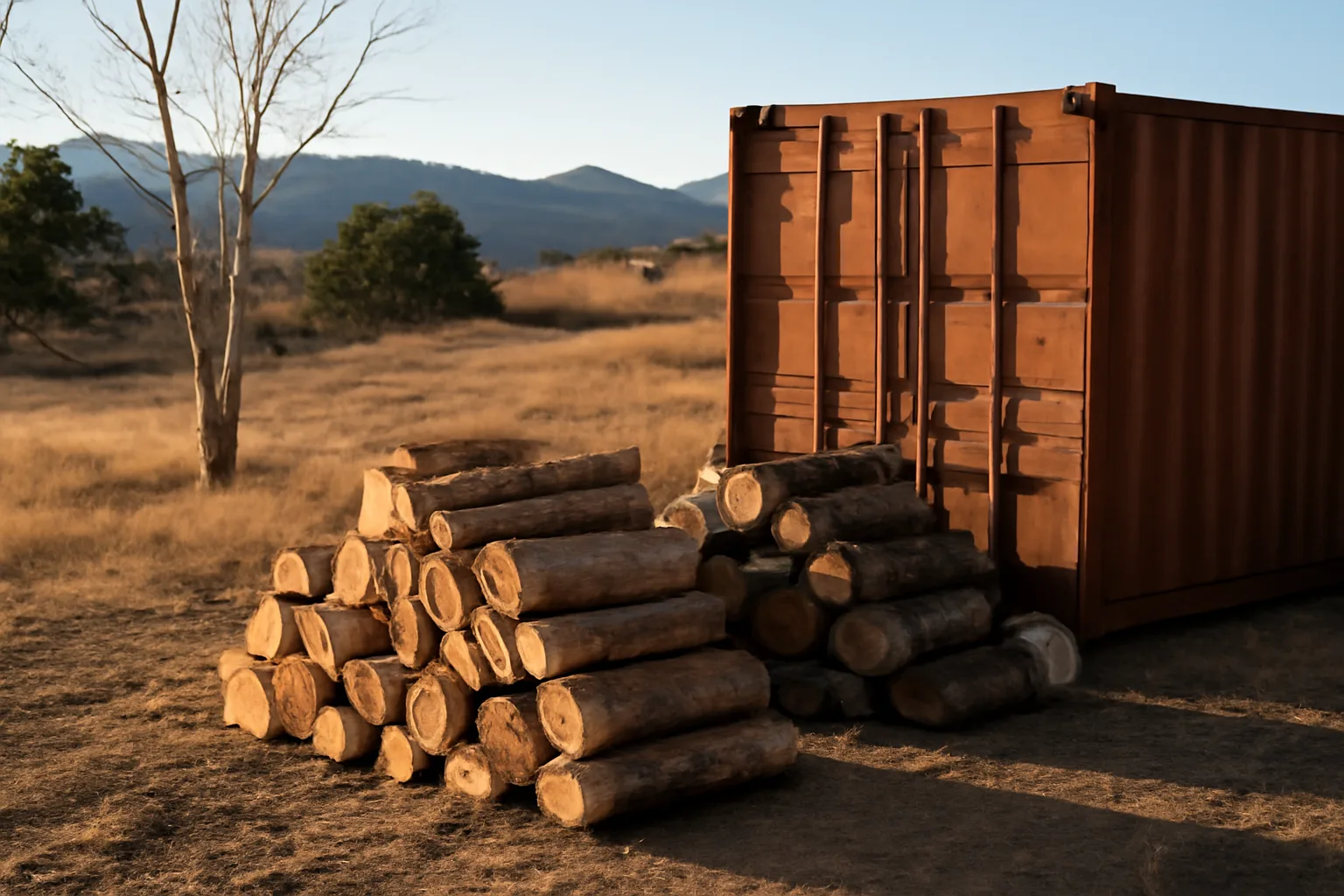
Kilns have the same trap. A used shipping container and a waste-wood furnace is how a lot of first yards start. A continuous industrial dryer can cost more than the rest of the business. In year one that is usually a waste of money. Colorado air already dries split pine and aspen faster than humid-state air. You are selling speed and a meter reading, not the only dry wood in the state. For a look at how another state talks dollars, see kiln firewood cost in Alabama.
Fuel for the kiln is a real line. Waste slabs are cheap until you run out. Propane is simple and expensive. Electricity is clean and depends on your rural rate. Nobody has a good public dataset for Colorado kiln energy per cord. Meter your first 20 loads.
Insurance is not optional in my book. I cannot quote your premium. Call two farm or commercial agents with the same description (kiln, trucks, delivery, wood-fired or not).
How long does kiln firewood take in Colorado?
The pest hold is 60 minutes once the core hits 140 F. The moisture run is longer. Split firewood in a batch kiln usually takes about 1 to 4 days per load. Species, starting moisture, stick size, and stack gaps change that more than the Colorado zip code does. [2][8]
Do not confuse those two clocks. USDA APHIS treatment schedule T314-a, the schedule most domestic firewood heat-treat talk traces to, is a minimum of 60 C, which is 140 F, held for 60 minutes. That is a core temperature requirement for the whole load, not the time from lighting the furnace to opening the door. [2]
Getting a wet cottonwood core to 140 F, then driving moisture down toward 20 percent, is a different job. The USDA Forest Products Laboratory hardwood drying handbook (FPL-GTR-118) shows moisture movement depends on thickness, species, and schedule. Firewood splits are uneven and often thicker than furniture stock. You cannot photocopy a 4/4 red oak kiln schedule onto a pallet of ponderosa and call it science. [8]
Colorado does help. Humidity on the Front Range and the Western Slope is often low. Split pine and aspen left in wind and sun can reach burnable moisture in one warm season. That is why a kiln is a business choice here, not a climate rescue. You run a kiln to hit a date, to kill insects, and to print a moisture number. CSU Extension firewood insect guidance is the reminder that pests ride in untreated loads even when the stick feels dry. [11]
I would pull test cores, use two meters, and weigh a marked crate each run for the first month. Copying a 48-hour cycle from a Facebook group is how you sell 28 percent wood in January.
Frozen or snow-packed wood takes longer. High altitude changes instrument readings more than it changes the physics. Red flag days can shut down a wood-fired box even if the load is mid-cycle. Plan a buffer.
Air-dry plus a short heat-treat is a valid Colorado method if your buyer only needs the 60-minute hold and your moisture is already there. Pure green-to-dry in the kiln is slower and costs more fuel. Pick one story and measure it.
What heat and moisture numbers does Colorado actually care about?
Two figures come up over and over. EPA Burn Wise treats firewood as seasoned at a moisture content of 20 percent or less. Domestic heat-treat talk for firewood uses a 140 F core held 60 minutes. Colorado does not mail you a moisture license. Buyers, parks, and pest rules still ask for the numbers. [1][2]
EPA Burn Wise says, "Seasoned firewood has a moisture content of 20% or less." That sentence is the one I would print on a hangtag if I sold retail. [1]
If you claim heat-treated, log the probe location, time at temperature, and the load ID. A sticker with no log is a story. USDA APHIS schedule T314-a is the 140 F / 60 minute hold. [2]
Volume is the third number. NIST Handbook 130 defines a cord as the wood in 128 cubic feet when ranked and well stowed. CDA Weights and Measures and Colorado's Measurement Standards Act sit behind that idea when a customer says you shorted them. [3][7]
| What you are asked | Number | Who cares |
|---|---|---|
| Seasoned moisture | 20% or less | EPA Burn Wise, your buyers |
| Heat-treat core | 140 F for 60 min | APHIS T314-a, parks, pest claims |
| A legal cord | 128 cubic feet | NIST HB 130, CDA measure rules |
| Typical batch kiln | 1 to 4 days | Your fuel bill and calendar |
I would sell on moisture plus a stacked cubic-foot photo. I would not argue that everyone sells a rick.
Can you cut your own wood or do you have to buy logs?
You can cut on land you own or lease, buy logs from a sawmill or landowner, or use public-land permits where they exist. A USDA Forest Service personal-use firewood permit is not a mill supply contract. If you want commercial volume off national forest, ask that ranger district about a commercial forest-products permit. Confirm the current price and allowed species with them. I will not invent a cord quota. [12]
Beetle-kill standing pine looks free from the highway. It is not. Timber theft cases start with someone saying they thought it was dead anyway. Get a written right of entry.
Private land in Colorado is the normal commercial path. Pay by the ton or by the acre, get a simple contract, and stay out of stream buffers if the landowner is in a forestry program. The Colorado State Forest Service can point landowners at management plans. They are not your purchasing agent.
National forest personal-use pages (Pike-San Isabel is the one Front Range people know) list rules on cutting live versus dead, stump height, and where you may drive. Read the district flyer that year. [12]
If your plan is to run up to the national forest every Saturday, you do not have a kiln business. You have a hobby with a furnace.
Other western states run different public-land and pest paper. Worth a look at how to start kiln firewood in Arizona and how to start kiln firewood in California if you also haul across a state line.
Where can you run a kiln without the county shutting you down?
The county can stop you when the state never notices you. Run the kiln where zoning already expects dust, tractors, and heat. Straight agricultural land with an existing farm use is the easy conversation. A five-acre rural lot in a foothills subdivision is the hard one.
Tell planning you will dry wood with a heated box, run a processor or splitter, stack inventory, and take deliveries. If you hide the kiln and they get a smoke complaint in November, you will wish you had the email.
Some counties treat a container kiln as a structure. Some ignore it until you add a roof and electric. Ask. Electrical and propane installs should be permitted work. I would not wire a three-phase blower as a weekend surprise.
CDPHE uses Air Pollutant Emission Notices for sources over de minimis thresholds. A tiny waste-wood box may sit under the line. A big commercial furnace may not. The APEN page is where you confirm, not a forum. [9]
Wildfire season is its own rulebook. Open burning bans are not the same as a closed kiln, but sheriff and fire districts get picky when the county is brown. Have a shut-down plan.
HOAs along the I-25 and I-70 corridors will fight noise and trucks. If covenants ban home businesses with employees or outdoor storage, you are done on that lot.
How do you sell a legal cord and not a face cord mess?
Sell a cord as 128 cubic feet of ranked and well stowed wood. That is the NIST Handbook 130 definition and the number CDA will have in mind if someone files a short-measure complaint. A face cord is a marketing shrug, not a unit I would put on an invoice. [3][7]
NIST Handbook 130 says a cord is "the amount of wood that is contained in a space of 128 cubic feet, when the wood is ranked and well stowed." Put that on your price sheet. [3]
Colorado's Measurement Standards Act (Title 35, Article 14) is the state statute behind commodity sales. CDA Weights and Measures handles devices and a lot of the commodity work. If you use a scale for bundles, that scale may need to be a legal-for-trade device. Confirm with CDA, not with the scale vendor. [7]
I would build a 4x4x8 rack and photograph every delivery against it. Takes five minutes. Ends half your disputes.
Loose thrown loads in a pickup are not a cord. If you sell pickup loads, sell them as a measured box volume and say so.
Grocery bundles are a different method of sale. Do not call a 0.75 cubic foot bundle a cord unit.
What pest and firewood movement rules hit Colorado sellers?
Emerald ash borer is established on Colorado's Front Range. CDA Plant Industry still tells people not to move firewood and to buy it where they burn it. The federal EAB quarantine ended in 2021. State and local rules did not vanish with it. Check the live CDA EAB page for the counties and materials they currently restrict. I will not paste a county list that goes stale. [6]
If you sell into state parks, USFS campgrounds, or any buyer who asks for heat-treated wood, you need a run log, not a vibe. 140 F at the core for 60 minutes is the treatment people mean. [2][12]
Do not build a business on hauling untreated mixed hardwood from an infested county to a mountain town because it is already cut. That is how you become the cautionary tale in a CDA update.
Ash is the sensitive species for EAB. Pine carries other pests and pitch problems. Kiln heat helps the sales story on both. It does not give you a passport to ignore a quarantine.
Shipping out of Colorado is a new paper pile (the receiving state's rules). Look at kiln firewood license in Arizona and kiln firewood license in California before you take that order.
Do you need air permits, insurance, and employee paperwork?
Maybe an air notice, yes on liability insurance, and yes on employee paper the day you hire. CDPHE APEN rules are threshold-based. Ask them with your fuel type and a rough heat input. Do not assume a waste-wood kiln is invisible. [9]
General liability is the policy I would buy first. Delivery on icy Front Range driveways is how claims start. Commercial auto if you deliver. Inland marine if the processor moves. I will not invent premiums.
Employees trigger an EIN (free from IRS), wage withholding, unemployment insurance, and workers' compensation through CDLE. Family labor is not automatically exempt. Ask CDLE, not your uncle. [10][13]
This page is not legal advice and it is not an approval. Confirm thresholds with CDPHE and CDLE for your exact setup.
What would I actually do in year one?
I would spend year one on paper, a legal yard, a used splitter or a modest processor, a simple batch kiln, and a moisture meter I actually use. I would pick one species story (beetle-kill pine, mixed conifer, or a hardwood blend you can restock) and sell a measured cord with a moisture number.
I would not buy a custom-wrapped trailer or a continuous kiln. I would not pay a private website for a national certification sticker. Waste of money until the phone rings on its own.
Target a real number of cords you can finish, not a fantasy of 2,000. Fifty honest cords taught more than a shiny yard that never shipped.
Winter mountain towns buy heat. Front Range shoulder seasons go quiet. Price for delivery time, not for your kiln payment.
Keep every heat log. If a park or a picky customer asks, you have the sheet.
If you later add a second state, start with their license article, not with a loaded trailer. Alaska's path is a different animal (how to start kiln firewood in Alaska).
How is Colorado different from wetter states for kiln firewood?
Colorado kiln firewood is a speed and pest product in a dry state. Long, humid, hardwood-heavy air-drying stories from the Southeast do not map onto Park County pine. California pest and air paper is heavier. Arizona shares the dry-air advantage and a different ag department.
Altitude, beetle-kill supply, EAB on the Front Range, foothills HOAs, and red-flag shutoffs are the local flavor. The federal moisture and heat numbers stay the same. [1][2]
Air seasoning already works here for split pine and aspen if you give it wind and a season. The kiln still earns its keep when you need a date, a park account, or a printed 18 percent ticket in October.
Confirm every fee, quota, and form with DOR, SOS, CDA, CDPHE, CDLE, your county, and your ranger district. Nobody here can stamp your kiln.
If you want a simple next step after you have read the boards' own pages, the kit and checklist live at /start. FirewoodPath is an independent publisher, not a law firm and not a service company.
Frequently asked questions
Do you need a license for kiln firewood in Colorado?
No single kiln firewood license exists. You typically need a Colorado sales tax license to sell wood, plus any city or county business license and land-use approval for the kiln and yard. Employees add CDLE workers' compensation and unemployment paper. Confirm each current form and fee with DOR, SOS, your county, and CDLE. Heat-treat records are process evidence, not a seller card.
How much does kiln firewood cost in Colorado?
Colorado publishes no official kiln-dried cord price. Retail asking prices vary by species, delivery, and whether the listing is a full 128 cubic foot cord. Startup cost is dominated by a processor and kiln, both in wide five-figure bands if you buy used commercial gear. Get local quotes the same week. I would not buy a continuous kiln in year one.
How long does kiln firewood take in Colorado?
Pest heat treat is 60 minutes after the core holds 140 F. Moisture drying in a batch kiln is usually 1 to 4 days per load. Starting moisture, species, stick size, and stack gaps matter more than the county line. Colorado's dry air speeds air-seasoning. It does not make a green load instant. Measure with a meter.
Is kiln-dried firewood required by Colorado law?
No. Colorado does not, as a general retail rule, require kiln drying to sell firewood. You still need honest measure and ordinary business paper. Parks, campgrounds, and pest rules may demand heat-treated wood. If you claim kiln-dried or heat-treated, your logs should match the claim. Confirm current CDA quarantine rules before you move ash.
Can I sell firewood from my house in a Colorado HOA?
Only if the covenants and the county both allow it. Many foothills HOAs ban commercial outdoor storage, chainsaws, and truck traffic. Get written confirmation. County home-occupation rules may separately cap employees and customers at the house. A kiln is a hard sell on a platted suburban lot. I would lease ag land instead.
Does Colorado tax firewood sales?
Retail firewood is usually tangible personal property. Do not assume a residential heating-fuel exemption without reading current CDOR guidance for your exact sale. City, county, and special-district taxes stack on the state rate. Get a sales tax license unless DOR tells you in writing that you do not need one. Confirm in SUTS.
What moisture content should kiln firewood be?
Sell at 20 percent moisture or less if you want to match EPA Burn Wise seasoned-wood guidance. Many kiln sellers aim a bit under that so the stick does not rebound in a snowy stack. Use a meter on freshly split faces, not on the sunbaked outside. I would print the number on the receipt.
Can I use national forest wood for a kiln business?
Usually not on a personal-use firewood permit. Those permits are for household wood, with district rules on quantity and location. Commercial use needs a commercial forest-products permit if the district even offers one. Confirm with the ranger district. Private land and sawmill logs are the normal commercial supply.
Do I need a phytosanitary certificate to sell inside Colorado?
Not for a typical in-state household delivery. You need to follow CDA pest and quarantine rules, especially for ash and any listed counties. A phytosanitary certificate shows up more when you ship out of state or a buyer demands official paper. Heat-treat run logs still help. Ask CDA Plant Industry before you advertise certified loads.
What is a legal cord in Colorado?
A cord is 128 cubic feet of ranked and well stowed wood under NIST Handbook 130, which is the measurement template CDA works from. A face cord is not a standard unit I would put on a tax invoice. If you sell bundles, declare the package volume or weight correctly. Short measure is how you meet Weights and Measures.
Do I need an air permit for a firewood kiln in Colorado?
Maybe. CDPHE requires an Air Pollutant Emission Notice when a source exceeds de minimis emission levels. A small waste-wood box might sit under the line. A large commercial furnace might not. Fuel type and heat input drive the answer. Ask CDPHE with real numbers. Do not take a forum post as a permit.
Is beetle-kill pine legal to sell as kiln firewood?
Yes, if you had the right to cut or buy it and you sell an honest quantity. Dead standing trees on someone else's land are not yours. Kiln heat helps the moisture and insect story. Pine still pitch-bleeds and throws sparks. Tell buyers what species they are getting. Confirm any local pest notes with CDA.
How do I prove wood is heat treated?
Keep a load ID, species, start time, probe location, core temperature chart, and the 60 minutes at 140 F. Photos of probes help. A printed sticker with no log is weak. Parks and out-of-state buyers are the people who ask. Match USDA APHIS T314-a if that is the standard you claim.
Do I need a timber harvest permit on private Colorado land?
Often no statewide timber harvest permit for a small private cut, but county land-use, slash, and access rules still apply. Some landowners sit in Forest Ag or have CSFS plans with extra conditions. Waterway buffers matter. Confirm with the county and the landowner's contract. National forest is a different permit world.
Sources
- NIST Handbook 130 (2024), method of sale of commodities: A cord is 128 cubic feet of wood ranked and well stowed
- Colorado Department of Revenue, Sales Tax License: Colorado requires a sales tax license to sell tangible personal property, which includes retail firewood
- Colorado Secretary of State, Business Center: Colorado business entities and trade names are filed with the Secretary of State
- Colorado Department of Agriculture, Emerald Ash Borer: CDA maintains Colorado EAB guidance and tells the public not to move untreated firewood
- Colorado General Assembly, CRS 2023 Title 35 (Measurement Standards Act, Article 14): Colorado Measurement Standards Act (Title 35, Article 14) governs commodity methods of sale including firewood volume
- USDA Forest Products Laboratory, FPL-GTR-118 Drying Hardwood Lumber: Kiln drying time depends on species, thickness, starting moisture, and schedule
- Colorado Department of Public Health and Environment, APEN: Colorado requires an Air Pollutant Emission Notice when a source exceeds de minimis emission levels
- Colorado Department of Labor and Employment, Workers' Compensation for employers: Colorado employers with employees must carry workers' compensation coverage
- Colorado State University Extension, Insects in firewood: Insects and pests can ride into new areas in untreated firewood even when the wood feels dry
- USDA Forest Service, Pike-San Isabel forest products permits: National forest firewood and forest-product removals require a district permit with current local rules
- Internal Revenue Service, Apply for an EIN: An EIN is obtained free from IRS.gov when you have employees or a bank requires one