Last updated 2026-08-21
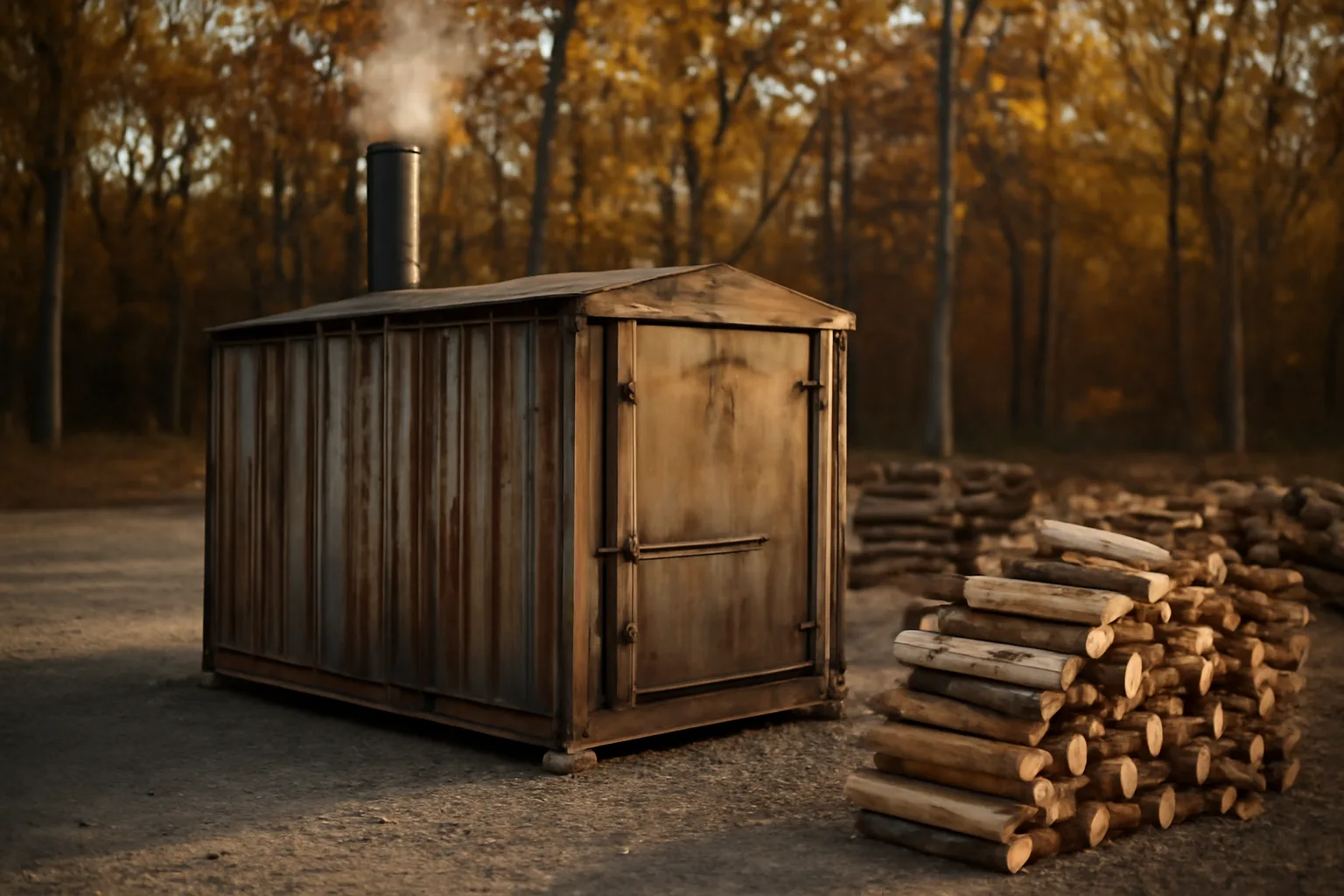
TL;DR
Kiln firewood is split wood dried in a kiln, usually to 20% moisture or less. You start with zoning, tax paper, and sale by the 128 cubic foot cord. Heat-treatment claims and interstate loads go through your state plant board. There is no national kiln firewood license. Confirm every mark and fee locally.
What is kiln firewood?
Kiln firewood is split wood that spent time in a heated kiln so water left the pieces on a schedule you can write down. Most stove buyers mean wood that is dry enough to light clean. EPA Burn Wise tells household burners to use wood at 20% moisture or less [1]. Some loads are only heat-treated for pests and can still be damp. Those are not the same product.
The kiln is speed plus a record. Air-dried wood can also hit 20% if you give it a long cover and a meter. Plenty of honest local wood is never kiln wood. The premium people pay is for a faster dry and a ticket you can defend.
Green pieces hold a lot of water. The USDA Forest Products Laboratory Wood Handbook treats moisture on an oven-dry basis and shows why a fresh split feels heavy and hisses on a stove [2]. Kiln firewood should not do that. If it still sizzles, you sold wet wood with a hot-box story.
There is no federal kiln firewood class. Washington does not hand out a kiln firewood permit. What exists is local land use, a cord rule, a tax decision, and state plant rules when wood travels [3][4]. That is the whole public path.
I would not call a charge kiln firewood until you cut a few mid-stack pieces and read them. Ends lie. Bark lies. A pretty crate lies. The meter after the charge is the product.
How do you start kiln firewood?
You start kiln firewood by proving you can run a commercial drying yard on that parcel, then by selling stacked wood you actually dried and measured. You do not start by buying the largest kiln in an ad.
Talk to planning first. Ask if a kiln, outdoor storage, and customer pickups fit the lot. Ask if a covenant bans commercial traffic. That visit is free. It ends more first years than a wet March does.
Build the dull file next. A local business license, or a written exemption. A sales tax account if your state taxes firewood (some treat residential fuelwood as exempt, some do not). Confirm with the revenue department. Do not guess the rate. IRS Publication 583 is the federal starter map for records if this is a trade you mean to profit from [10].
Read how your state adopted the NIST Handbook 130 method of sale. In that model a cord is 128 cubic feet [3]. Keep a copy in the truck. Then decide if you will stay in-county or claim treated wood for parks and state lines. Those are different businesses. Parks and import desks want a treatment story your plant board will stand behind [4][6][12].
Buy a pin meter you trust. Run charges until the schedule matches the meter. Sell a small stack. Keep a lot book (source, start moisture, kiln hours, end moisture, stacked volume, where it went). Grow only when dry inventory is the bottleneck.
A national startup kit from a random coach is usually a waste. The desks that can stop a load are zoning, weights and measures, and agriculture. For delivery claims and ticket fights later, keep kiln firewood guide 65 with your insurance notes.
Is kiln-dried firewood the same as heat-treated firewood?
No. Kiln-dried firewood is a moisture claim. Heat-treated firewood is a temperature and time claim at the core. You can do both in one charge. You can also cook bugs and leave the wood wet.
The APHIS wood packaging path for ISPM 15 heat treatment is a pest schedule. Agency guidance describes heat treatment as a "minimum wood core temperature of 56°C for a minimum of 30 minutes" [5]. That number is about living pests, not about a 20% moisture ticket.
Maine tells importers that untreated firewood is restricted and points people at certified treated wood [6]. California's CDFA firewood page is a pest page, not a stove page [7]. If you stamp HT, you need the schedule and the recorder chart. If you stamp KD or kiln-dried, you need moisture numbers after the wood cools.
I keep both logs even for local stove wood. Ink is cheap. A ranger asking for the charge record is not.
Do not print "sterile" or "pest free forever." You cannot prove forever. Use the words your plant board uses. If they want "heat treated" and a standard code, use that. If they do not certify kiln drying as a treatment, do not pretend they do.
What moisture content should kiln firewood hit?
Aim at 20% or less if a person will burn it. EPA's best wood burning practices page is blunt about dry wood: "Dry, seasoned wood has a moisture content of 20% or less" [1]. That is the consumer line I would put on a retail pile.
Going to furniture dryness (often near 6 to 8 percent in lumber kilns) is a waste of fuel for firewood. You spend more hours, you risk checking, and the stove does not thank you once you are already under 20%.
Measure more than one piece. Cut into the side of a few splits from the middle of the crate. Read them. Write the range, not the prettiest number. Extension firewood pages walk through meters and seasoning the same way, even when they are talking about air-dried stacks [8][11].
Nobody has a clean national dataset on what bags labeled kiln firewood actually read at the curb. The closest official household number is still EPA's 20% practice line [1]. If your meter says 26%, you have fuelwood. You do not have a kiln premium.
Sell on the number you wrote, not on how long the fans ran.
What paper do you need before you sell the first cord?
You need land-use permission for a commercial yard, a business license or a written exemption, a tax decision from your state, and a volume story your weights and measures office will accept. If you claim treated wood, you also need whatever mark or agreement the plant board wants. Confirm each item. Nobody can promise you an approval date.
Zoning is first if the kiln, the steam, the saw, and the pickup line are new to that parcel. Air programs sometimes care about kilns. Small units are often untreated in practice, and sometimes they are not. Ask the state air desk. Do not invent an exemption.
Firewood is not a federal commodity license. Skip anyone selling you a national certificate. NY, Wisconsin, Maine, and California publish real movement rules because pests ride in firewood [4][6][7][12]. Those pages beat a laminated "USDA kiln" card from a vendor.
HOA paper can kill a driveway operation faster than the county. Read the covenants. If you want one folder that lines up moisture claims, cord language, and HOA questions, FirewoodPath sells a $129 one-time Moisture + Cord + HOA Kit at /start. You can build the same file from the agency pages cited here.
Ticket language and complaint handling sit next to this file, not inside it. kiln firewood guide 23 is the kind of follow-on people need after the first angry email.
How is a cord of kiln firewood measured?
A cord is 128 cubic feet of stacked wood under the NIST Handbook 130 model rule [3]. The picture is a 4 by 4 by 8 foot rank, wood ranked and well stowed. Kiln drying does not change the geometry. Dry wood is just lighter in the same hole.
A thrown pickup load is not a cord. I would not sell "a truckful." You will fight about voids. The inspector will not help you.
Half a cord is 64 cubic feet stacked. A quarter is 32. Do the math on the rack, not on hope. Penn State Extension spells out cords, ricks, and the usual buyer confusion in plain language [8]. Virginia Cooperative Extension does the same for home heating wood [11].
Some states allow sale by weight. Confirm. Weight plus kiln wood is a sharp edge, because you removed water and the pile got lighter. If you go by weight, put the scale and the moisture claim on the same ticket so nobody thinks you evaporated their money.
Face cords and ricks are local slang. They are not a safe substitute for 128 cubic feet unless your weights office says they are. I would print the cubic feet.
Can you haul kiln firewood across state lines?
Sometimes, if the destination allows treated or certified wood and your mark matches a real schedule. Untreated firewood is the load that gets turned around.
New York restricts untreated firewood and uses a 50 mile idea for untreated wood from its source, plus import limits on untreated wood [4]. Wisconsin pushes certified wood and tells people not to haul untreated firewood onto many public properties [12]. Maine and California publish importer and pest rules that do not care how pretty your kiln photos are [6][7].
APHIS still runs a public firewood message because insects and diseases move in bark and cracks [13]. The old federal emerald ash borer quarantine is not the whole story anymore. States and parks kept their own gates.
A kiln stamp is not a passport. Ask the destination plant board what they accept this season. Ask if kiln-dried (moisture) counts, or only heat-treated (temperature). Those answers differ. I will not give you a 50-state cheat sheet that rots.
If a load will cross a line, read kiln firewood guide 29 before you promise a campground it is "legal everywhere."
What equipment do you need in year one?
You need a saw, a splitter, a way to move crates, a kiln you can control and record, a moisture meter, and a stacked-measure frame. That is enough to learn if anyone will pay you.
Skip a giant processor until you have sold dry wood through a full heating season. Peak splitting rate is not your first constraint. Dry inventory is.
The kiln can be a dehumidification box, a small progressive kiln, or a converted container with real baffles and a recorder. I care about even air, a temperature record, and doors you will actually close. I do not care about the color of the steel.
Wood dust in a processing bay is an OSHA health topic, not a vibe [14]. A cheap fan pointed at the yard is not a dust plan. You do not need a factory. You do need to not live in your own chips.
Meters: buy one pin meter you will replace tips on, and keep spare batteries in the truck. Infrared guns read bark. They do not replace pins for a moisture claim.
What does a first-year kiln firewood season look like?
It looks slow if you refuse to sell wet wood. You buy or cut green. You split smaller than your pride wants, because kiln air needs surface. You crate so air moves. You run charges you can finish. You reject wood that comes out wet. You sell what you measured.
Cash gets tight in spring. Demand rises before first frost. If the kiln is still a science project in October, you will dump green wood or sit on money. I would run test charges in late winter on cheap species you do not mind ruining.
Keep the lot book even when you are tired. Source land, date in, start moisture, schedule, end moisture, stacked volume, invoice number. That book is how you answer a weights inspector and a customer who owns a meter.
First-year volume targets people post online are mostly fiction. Your real cap is kiln throughput times honest yield. Count crates that passed the meter, not trees you looked at.
When a delivery goes wrong, the season gets legal in a hurry. Keep kiln firewood guide 53 with the lot book so the ticket and the claim file match.
Where do new kiln firewood operators waste money?
They buy too much kiln. They wrap every crate in custom print before they have a repeat buyer. They pay for a fake federal firewood license. They lease land they cannot get a commercial use on.
Cheap meters are a waste. So are uncalibrated good meters. If you claim 18% and read 18% on a dead battery, you still sold a story.
Advertising "hospital grade" or "zero smoke" is a waste that turns into a claim. Stoves smoke for a dozen reasons. You control moisture and species talk. You do not control their damper.
A second truck before you have a loading plan is how you finance rust. Rent the ugly one until weekends are full.
Spending on brand films while your stacked measure is a pile against a barn wall is backwards. The rack is the product. For how those wasted claims turn into letters, see kiln firewood guide 41.
What insurance and liability issues show up first?
Delivery is first. Wood on a foot. A strap that lets go. A scratched gate. Then product talk, when someone burns wet wood you sold as kiln dry, or a plant inspector traces a beetle to a crate you marked treated.
Write what you sold. Keep the moisture log. Use plant-board words, not cabin-catalog words. General business policies miss logging and firewood delivery more often than people expect. Ask for the form that actually names firewood or wood products. Confirm limits. I will not invent a premium.
Label lies are expensive. So is a Facebook post that says your wood is legal in every park in the region. Parks follow their own lists [12][7].
Neighbors call about fans at 2 a.m. That is a zoning and nuisance problem before it is an insurance problem. Quiet hours belong in the first-year plan.
If you want the claim-side walkthrough after a bad drop, start with kiln firewood guide 11 and kiln firewood guide 17. Read them before you need them.
What should you print on a kiln firewood ticket?
Print your name and address, the stacked volume in cords or a legal fraction, the origin county or state, the date, and the price. Add species only if you know it. Add moisture only if you measured it after the charge. Add a treatment mark only if the plant board would recognize it [6][7].
Do not print a face cord as if it were 128 cubic feet. Do not print "about a rick." NIST's model sale unit is the cord of 128 cubic feet [3]. Your ticket should look like you have read that page.
If the wood is for a campground, ask them what phrase they need. Then confirm that phrase with agriculture, not with the camp host alone.
A simple comparison helps when you train whoever writes tickets:
| What you say | What you must be able to show | Who may ask |
|---|---|---|
| Kiln-dried | Meter readings after the charge | Buyer, weights office |
| Heat-treated | Time and core temperature record | Plant board, park |
| Air-seasoned | Time in stack, meter if you claim a number | Buyer |
| A cord | 128 cubic feet stacked [3] | Weights and measures |
FirewoodPath is an independent publisher, not a law firm and not a service company. Confirm marks, fees, and forms with the board that will actually stand in your yard.
Frequently asked questions
What is kiln firewood?
Kiln firewood is split wood dried in a heated kiln so moisture drops on a recorded schedule. Buyers usually want 20% moisture or less for clean burning, which matches EPA Burn Wise practice. Some sellers mean heat-treated wood for pests, which can still be damp. Ask which claim is on the ticket.
How do you start kiln firewood?
Confirm zoning for a commercial kiln yard, then set up local business and tax paper. Sell by the 128 cubic foot cord used in NIST Handbook 130. Use a moisture meter and a lot book. If you claim heat treatment or cross a state line, ask your plant board what mark they want. There is no national kiln license.
What moisture should kiln-dried firewood be?
For stove and fireplace wood, 20% or less is the line EPA gives household burners. Lower than that rarely pays on firewood. Measure mid-piece after the charge, not only the dry-looking ends. If you cannot show a number, do not charge a kiln premium.
Is a face cord the same as a cord?
No. A cord is 128 cubic feet stacked. A face cord is slang and its volume changes with piece length. A 16 inch face cord is often near one third of a cord, but your weights office may not accept that nickname. Print cubic feet or a legal fraction of a cord.
Do I need a USDA license to sell kiln firewood?
No. USDA and APHIS publish pest and wood-packaging rules. They do not issue a general kiln firewood seller license. Local zoning, tax, weights and measures, and your state plant board are the desks that matter. Confirm each one. Ignore anyone selling a national certificate.
Can I sell kiln firewood from my driveway?
Only if zoning and any HOA covenant allow commercial storage, a kiln, and customer traffic. Many residential lots fail that test. Get the answer in writing before you pour a pad. A quiet neighbor is not the same thing as a legal use.
Does kiln drying kill emerald ash borer?
A true heat-treatment schedule at the core can kill pests in wood. A short or cool kiln run that only dries the surface may not. Federal EAB quarantine rules have changed, and states still restrict firewood. Do not stamp treated unless your plant board accepts your schedule.
How long does a kiln charge take?
There is no single honest number. Time depends on species, starting moisture, piece size, and how even your air is. Some charges finish in about a day. Wet oak in a weak box can take several. Trust the meter at the end, not a vendor's hour claim.
Can I call air-dried wood kiln firewood?
No. Air-dried wood can be excellent stove wood if it is truly under 20%. It is not kiln firewood. Using the kiln word without a kiln charge is a ticket problem waiting for a customer with a meter. Sell it as seasoned and show the number.
What belongs on a kiln firewood label?
Your name, address, date, stacked volume, origin, and price. Species only if true. Moisture only if measured. Treatment marks only if the plant board would recognize them. Skip slogans like sterile or legal in every park. Parks keep their own lists.
Do campgrounds require kiln-dried firewood?
Many public parks ban untreated firewood from outside a set area and sell or allow certified treated wood. Some accept kiln-dried. Some want a named heat treatment. Read that park's current firewood rule and match the destination state page before you advertise.
How do I price a cord of kiln firewood?
Price the stacked cord you can prove, then add what your kiln time and reject rate actually cost. Dry wood is lighter, so a price-per-pound habit can underpay you. Local green wood sets the floor. Your ceiling is what buyers will pay for a meter reading and a clean light.
Is firewood sales tax exempt?
It depends on the state and sometimes on residential fuel rules. Some revenue departments exempt firewood used for home heat. Some tax it like any goods. Confirm with your state department of revenue before you skip tax on an invoice. Do not copy a forum answer.
What records should I keep the first year?
Keep source, date in, start moisture, kiln schedule, end moisture, stacked volume, and invoice number for every lot. Save charge recorder charts if you claim heat treatment. Keep zoning and tax letters. Those files answer inspectors faster than a branded crate.
Sources
- U.S. EPA, Best Wood Burning Practices: Household burning practice is dry, seasoned wood at 20% moisture or less.
- USDA Forest Products Laboratory, Wood Handbook FPL-GTR-282: Moisture in wood is treated on an oven-dry basis and green wood can hold large amounts of water.
- NIST Handbook 130, current edition: Model method of sale sets a cord at 128 cubic feet of stacked wood.
- New York DEC, firewood movement page: New York restricts untreated firewood imports and untreated movement beyond a 50 mile source limit.
- California CDFA, Firewood: California publishes pest-based firewood requirements and approved-wood guidance.
- IRS Publication 583, Starting a Business and Keeping Records: Federal starter guidance for business records and setup if the activity is carried on for profit.
- Virginia Cooperative Extension, publication 420-400: Home firewood heating publication covering measure and use of firewood.
- Wisconsin DNR, Firewood restrictions: Wisconsin restricts untreated firewood on many properties and promotes certified wood.
- OSHA, Woodworking eTool wood dust: Wood dust in processing areas is an occupational health hazard OSHA addresses.